




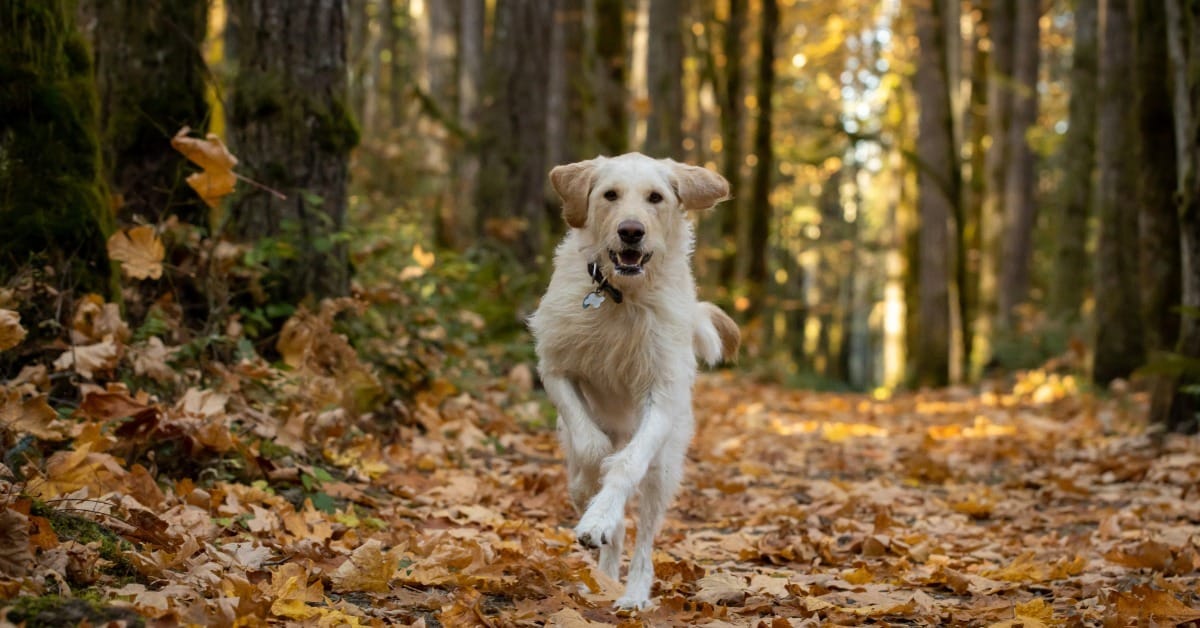
Fall hiking with your dog is safest when you know who else is using the woods. Deer hunting seasons run through much of October to mid-December across Canada, so check your province’s dates and the rules for the land you plan to walk, wear bright orange on yourself and your dog, stay on marked trails in daylight, and keep your dog right beside you. Watch for deer in the rut, porcupines, late-season bears, ticks and legally set traps, and never let your dog chase wildlife.
Cool air, bright leaves and no mosquitoes make late fall one of the best times of year to walk the woods with your dog. It is also the busiest time of year for the wildlife living there, and for the hunters who head into the same forests. A little planning keeps your dog safe, keeps the wildlife undisturbed, and keeps everyone on the trail relaxed. This guide covers hunting seasons, how to stay visible, the wildlife you are most likely to meet and what to do when your dog meets it first.
When is hunting season in Canada?
Every province sets its own seasons, and the dates change by species, weapon and wildlife management unit. As a rough guide, fall is peak season almost everywhere:
- Ontario: Ontario’s 2026 season tables show deer seasons in some areas running from September 19 to December 15. In a large part of central and southern Ontario, the main rifle and shotgun deer hunt falls between November 2 and November 15. Moose, bear, turkey, waterfowl and small game seasons overlap through the fall as well.
- Sundays are not always quiet: Ontario lists the southern municipalities that allow Sunday gun hunting during open seasons, and the list grows most years. Other provinces set their own Sunday rules, so check before you assume a Sunday walk will be hunter-free.
- Everywhere else: Alberta, British Columbia, Quebec and the Atlantic provinces all run their main big game seasons through the fall. Your province’s hunting regulations summary lists the dates for the exact area you plan to visit.
Where hunting is allowed, and where it is not
Most city parks, provincial parks and conservation areas close to towns do not allow hunting, but there are plenty of exceptions. In Ontario, Crown land, county forests and private land can all be open to hunters with the right licence or the landowner’s permission. Some provincial parks allow hunting in certain zones, and each conservation authority decides for its own lands. The Bruce Trail Conservancy points out that the trail itself crosses county forests and private properties where hunting may take place, even though its own lands and the parks along the route do not allow it.
Before you go, check the website of the park, conservation authority or trail organization, and read any signs at the trailhead. If a sign says hunting is in progress, choose a different walk for the day.
Be seen: wear bright orange on yourself and your dog
In Ontario, licensed hunters must wear at least 400 square inches of solid hunter orange on their upper body plus an orange head cover. Hikers do not have to follow that rule, but borrowing the idea makes a lot of sense. Brown, grey and black blend straight into a November forest, and so does a brown or black dog moving through the brush.
- Wear blaze orange: A bright orange hat and jacket or vest make you easy to spot from every direction.
- Put orange on your dog too: A bright orange layer on your dog’s body stands out far better than a small item around the neck, especially on a dark-coated dog.
- Avoid white and tan on your dog’s back end: A flash of white tail in the trees can look a lot like a deer to someone at a distance.
- Make friendly noise: Talk with your hiking partner, or say hello when you hear someone nearby, so hunters know people and dogs are on the trail.
Plan your timing
Deer and the people hunting them are most active at dawn and dusk. The days are short in November, and after the clocks go back the light fades well before supper time. Plan your hikes for the middle of the day, start early enough to finish with daylight to spare, and pick shorter loops you know well. Our complete guide to walking your dog in the dark covers the walks closer to home that fall after sunset.
Keep your dog close, and stay on the trail
A dog ranging through the bush is harder for a hunter to see, more likely to find a porcupine or a trap, and more likely to chase a deer. In Ontario, the Fish and Wildlife Conservation Act makes it an offence to let your dog run at large in areas usually inhabited by big game during the closed season, and the provincial trap safety page recommends keeping your dog on lead on Crown land, conservation reserves, private land and in some provincial parks.
Even where the rules allow more freedom, fall is the time to keep your dog right beside you. A dog who stays close, checks in with you and comes back the moment you call is a dog who stays safe in the woods. If your dog’s recall falls apart the moment a scent gets interesting, our guide to training a reliable recall explains how to build one, and the woods are not the place to test it until it is solid.
Wildlife you might meet on a fall hike
Deer in the rut
White-tailed and mule deer breed in late fall, and the rut peaks around mid-November. Bucks become bold and single-minded, cross trails and roads without warning, and may stand their ground against a dog rather than run. A dog that chases a deer can end up injured, lost or far from the trail. If you see a deer, stop, keep your dog beside you, and give it plenty of room to move away.
Coyotes
Coyotes live in forests, farmland and city ravines right across Canada. In the fall, young coyotes leave their family groups and travel to find their own territory, so you may see more of them. A coyote will usually avoid you, but it may follow or challenge a dog it sees as a rival. Keep your dog close, stand tall, make yourself big and loud, and back away calmly without turning and running.
Black bears
In Ontario, black bears usually den from November to April, but a mild fall can keep them active later than usual as they search for the last of the food. Ontario Parks warns that a dog running ahead on the trail can provoke a bear and lead it straight back to you. Make noise as you walk, keep your dog beside you, and if you see a bear, stay calm, stay together and back away slowly. Call 911 if a bear threatens you or your dog.
Porcupines
Porcupines cannot shoot their quills, but the barbed quills come loose the moment a curious dog gets too close. Quills work their way deeper over time, so take your dog to a veterinarian right away. Do not pull or trim the quills yourself, because broken quills are harder to remove and can migrate into the body.
Skunks and raccoons
Both are busy feeding before winter and often move around at dusk. A skunk usually stamps its feet and raises its tail before it sprays, which gives you a few seconds to call your dog back and walk away. Raccoons can carry rabies, so check with your veterinarian that your dog’s rabies vaccination is current, and call your veterinarian if your dog gets into a scuffle with any wild animal.
Ticks
Many people put tick prevention away when summer ends, but the Canadian Veterinary Medical Association notes that adult blacklegged ticks are typically most active in the fall. In parts of southern Canada they can stay active through the winter whenever there is no snow on the ground. Ask your veterinarian about year-round protection, and check your dog’s ears, armpits, belly and between the toes after every hike.
Watch out for legally set traps
Trapping is legal on Crown land, on private land and in some provincial parks and conservation reserves, and much of it happens in the late fall and winter. A trap set for a raccoon, fox or coyote can seriously injure a dog that wanders off the trail. The best protection is keeping your dog close and on the marked path. If you walk on private land, ask the landowner whether anyone traps there.
It is worth learning how to release a trap before you ever need to. The Government of Ontario explains the steps for the most common trap types on its Protect your dog from wildlife traps page, and The Fur-Bearers has a step-by-step video. Stay calm if it happens, keep your dog as still as you can, and get to a veterinarian afterwards even if your dog seems fine.
Why chasing wildlife is a behaviour problem, not just a safety problem
Most dogs that chase deer, squirrels or rabbits are not being bad. They are following an instinct, and every successful chase makes the next one more likely. The chase also starts long before the sprint: a frozen stance, a hard stare, ears pricked and a body leaning forward. If you learn to spot those early signs, you can calmly interrupt your dog and bring their attention back to you before the chase begins.
That is exactly what we teach. Our trainers work with you and your whole family in your own home and on your own walks, using the voice tones and body language dogs already understand. Your dog learns to look to you as the calm leader when something exciting appears, so a walk in the woods stays a walk. If your dog reacts to gunshots, rustling brush or other dogs on the trail, our complete guide to helping a fearful dog and our complete guide to reactive dog training explain what is going on. Every program comes with our Life Of Dog Support Guarantee, so your trainer stays with you for the life of your dog. Find a trainer near you to book an in-home visit.
Your fall hiking checklist
- Check hunting season dates and the rules for the land you plan to walk.
- Read the signs at the trailhead and skip any area with hunting in progress.
- Wear bright orange, and put bright orange on your dog.
- Hike in the middle of the day and finish before dusk.
- Stay on marked trails and keep your dog right beside you.
- Talk and make friendly noise so hunters and wildlife know you are there.
- Give deer, coyotes and bears plenty of room, and never let your dog chase.
- Carry water, your veterinarian’s number and a charged phone.
- Check your dog for ticks, burrs and cuts when you get home.
Frequently asked questions
Is it safe to hike with a dog during hunting season?
Yes, with some planning. Check the season dates and land rules, wear bright orange on yourself and your dog, stay on marked trails in daylight, keep your dog right beside you and make friendly noise as you walk.
What colour should a dog wear during hunting season?
Blaze or hunter orange is the most visible colour in the woods. A bright orange layer on your dog’s body is easier to see than a small item around the neck, especially on a brown or black dog.
Can you hunt on Sundays in Ontario?
In many places, yes. Ontario permits Sunday gun hunting during open seasons in a list of southern municipalities, which it updates each April and September. Check the list for the area you plan to hike.
What should you do if your dog chases a deer?
Call your dog back calmly and do not run after them, because running turns it into a game. Once your dog returns, check for injuries and keep them right beside you for the rest of the walk. If chasing is a habit, work on recall and impulse control at home before the next hike.
Are ticks still active in November?
Yes. Adult blacklegged ticks are typically most active in the fall and can stay active on mild winter days without snow cover. Check your dog after every hike and ask your veterinarian about prevention.
What should you do if a porcupine quills your dog?
Go to a veterinarian right away. Do not pull or cut the quills yourself, because they can break and travel deeper into your dog’s body.
Sources: Government of Ontario, Dates for the deer and moose hunting seasons (2026), Sunday gun hunting, Ontario Hunting Regulations Summary: general regulations, Protect your dog from wildlife traps and Fish and Wildlife Conservation Act, 1997; Bruce Trail Conservancy, Hiking During Hunting Season; Ontario Parks, How to be a Bear Wise visitor; WildSafeBC, Deer; Canadian Veterinary Medical Association, Ticks are still on the move; Cornell University College of Veterinary Medicine, Porcupine quill injuries in dogs; The Fur-Bearers, How to release pets from wildlife traps. Checked November 2026.
Free guide: Want calmer, safer walks wherever you go? Download our A Guide to Successful Dog Walking guide (PDF) for tips that keep every walk safe and enjoyable. You can find more handouts on our Free Dog Training Resources page.
Find Your Local Trainer