




The clocks go back on Sunday, November 1, and overnight the evening walk changes. By December, most of Canada has lost the light by 5pm, which means the walk before work and the walk after dinner both happen in the dark. For many families that is five months of walking a dog who can hear and smell far more than you can see.
Walking in the dark does not have to feel tense. With the right setup and a dog who looks to you for direction, it can be one of the calmest walks of the day. This guide covers why dogs behave differently after dark, how to stay visible and safe, and the training that makes night walks easier for both of you.
Why dogs act differently on dark walks
Your dog notices things before you do. Dogs see movement well in low light and hear and smell far better than people do. A rabbit under a hedge or a person standing in a driveway can register with your dog long before you spot it, so reactions seem to come out of nowhere.
Shapes look different. A garbage bin, a lawn ornament or a person in a hooded coat can look strange in the dark. Dogs who stay relaxed about these things in daylight sometimes stop, stare or bark at them at night.
Wildlife comes out. Raccoons, skunks, rabbits and, in many Canadian neighbourhoods, coyotes are most active around dusk and after dark. A dog with a strong chase drive can go from calm to pulling hard in a second.
You feel different too. Many owners walk faster, grip the leash tighter and scan the street more on a dark walk. Your dog reads that tension instantly and starts to watch for trouble as well.
Be seen: visibility comes first
Drivers struggle to see a dark coat and a dark dog on a wet road at 6pm in November. Make both of you easy to spot.
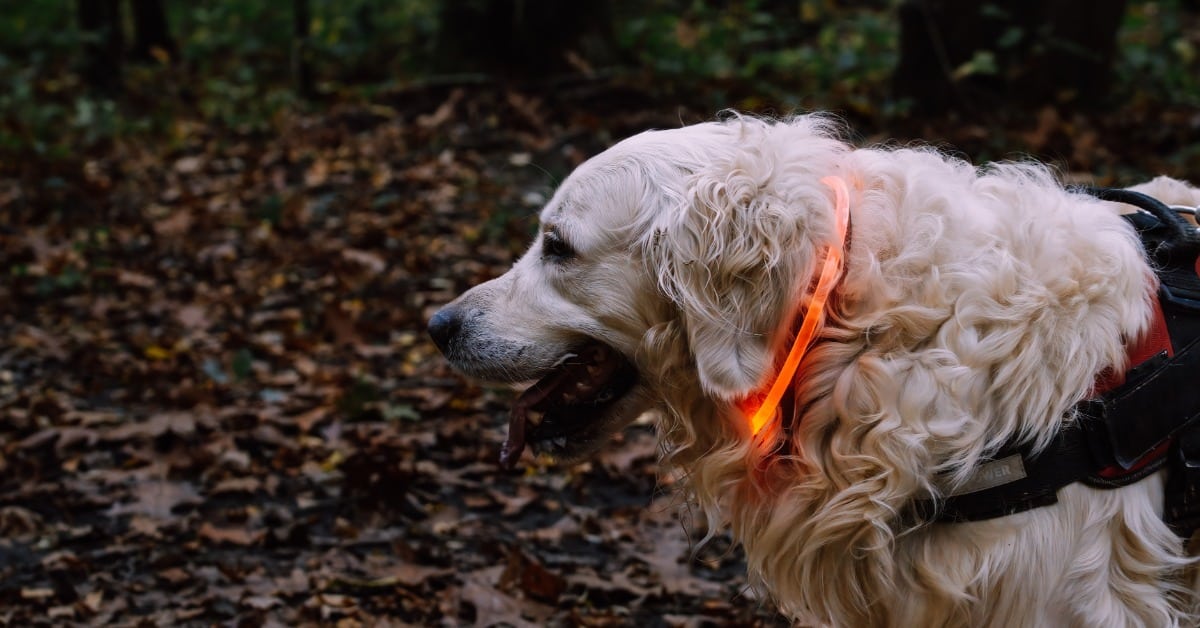
- Light up your dog. A reflective vest or a clip-on LED light on your dog’s collar or harness shows drivers and cyclists exactly where your dog is, including at the end of the leash.
- Light up yourself. Wear a reflective jacket or armband and carry a headlamp or small flashlight. A headlamp keeps both hands free for the leash.
- Keep reflective gear by the door. If it lives with the leash, it goes on every time.
- Check the tags. Make sure your dog’s ID tag and microchip details are up to date before the dark months. A dog who slips away at night is harder to find.
Choose your leash and route with care
- Use a standard leash, not a retractable one. A retractable leash lets your dog get several metres ahead, where you cannot see what is under their nose and drivers cannot see the line at all. Our post on why retractable leashes can be dangerous explains the risks.
- Keep your dog on leash. Even a dog with a good recall can miss a call when a coyote or deer appears in the dark. Keep off-leash time for daylight and safe, enclosed spaces.
- Pick well-lit streets. Walk routes with streetlights and sidewalks, and save the trails and ravines for weekend daylight.
- Walk facing traffic where there is no sidewalk, with your dog on the side away from the road.
- Keep phone use for emergencies. Your eyes and your attention are your best safety tools on a dark street.
Watch the ground
You cannot see what your dog is sniffing or picking up in the dark. Broken glass, chicken bones, discarded food and, later in the season, road salt and de-icer are all harder to spot. A headlamp pointed at the ground helps. When winter comes, rinse or wipe your dog’s paws after walks on salted sidewalks.
The complete guide to calmer walks in the dark
- Practise at dusk first. Start the switch now by walking at dusk for a week or two, so your dog adjusts to the fading light gradually rather than all at once after the time change.
- Start the walk calmly. A dog who bursts out of the front door is already overexcited before the first dark corner. Ask your dog to wait calmly at the door and let you go first. The walk begins once your dog settles.
- Keep your dog beside you. On a dark walk your dog should be at your side, not out front on patrol. A dog in front feels responsible for checking every shadow. A dog beside you can follow your lead. Our post on how to stop your dog from pulling on the leash covers how to build this.
- Stay relaxed on the leash. Keep your arm loose and your breathing steady, even when something moves ahead. Your calm tells your dog that you have it handled.
- Spot the early warning signs. A sudden stop, a hard stare, pricked ears, a stiff tail or raised hackles usually come before barking or lunging. Our guide to dog body language explains each one. Step in at the first sign, not after the explosion.
- Make space from wildlife. If you see a coyote, keep your dog close, stand tall, and back away calmly toward a lit street. Do not turn and run. If you see a skunk, cross the road early and give it plenty of room.
- Keep dark walks shorter and add brain work at home. On the coldest, darkest evenings, a shorter walk plus ten minutes of brain games or training indoors tires most dogs out as well as a long walk does. Our post on preparing your dog for shorter walks and more indoor time has ideas.
- Keep everyone consistent. If one person lets the dog pull ahead and another keeps the dog beside them, your dog gets two different answers. Everyone who walks the dog in the dark needs the same plan.
If your dog is reactive or fearful at night
Some dogs who cope well in daylight struggle after dark. Barking at shadows, refusing to leave the driveway or lunging at people who appear suddenly are all signs your dog feels unsure. Increase your distance from triggers, walk at quieter times, and keep sessions short and successful. Our complete guide to reactive dog training walks through the full process. If your dog has bitten or tried to bite, or if you struggle to hold on during a reaction, get professional help rather than working on it alone.
Why in-home training helps with night walks
Night walk problems happen at your front door, on your street and past the same dark driveway every evening. That is where we work on them. An in-home lesson lets your trainer see exactly what sets your dog off on your route and show the whole family how to handle it, so every walker gets the same result.
Overall
Walking in the dark comes down to two things: being seen, and having a dog who follows your lead. Light up both of you, keep your dog close on a standard leash, pick lit routes, and stay calm when something moves in the shadows. With a little practice now, the dark months can bring the calmest walks of the year.
Every Bark Busters program comes with our Life Of Dog Support Guarantee, so your trainer stays with you for the life of your dog, through every season.
If dark walks with your dog have become stressful, find your local Bark Busters trainer and book an in-home lesson.
Find Your Local Trainer