




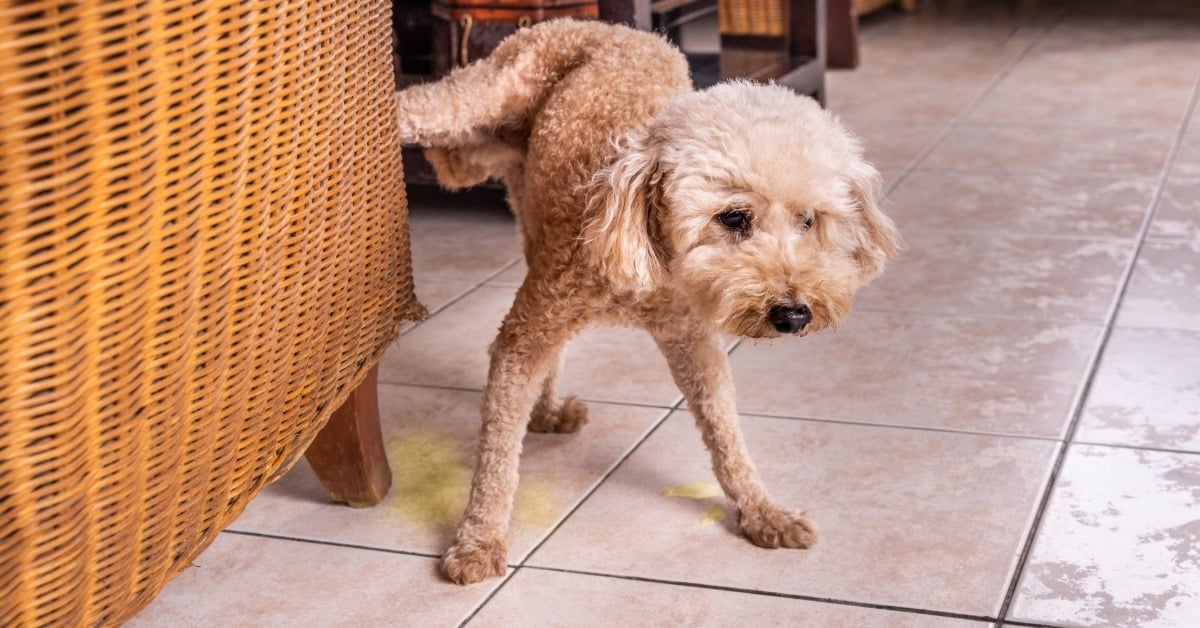
When a house-trained adult dog starts peeing inside, the first step is always a vet check, because urinary tract infections, bladder stones, kidney disease, diabetes and age-related incontinence can all cause accidents. If your vet rules out a medical cause, the reason is usually a change your dog is struggling with: a new routine, cold or wet weather, stress, a new pet, marking, or house training that never quite stuck. The fix is to treat the cause, clean every spot thoroughly and go back to the basics of a consistent toilet routine.
Few things frustrate owners more than a dog who “knows better” suddenly leaving puddles on the carpet. The good news is that adult dogs rarely forget their house training without a reason. Once you find that reason, most dogs return to reliable habits within a few weeks. Here is how to work out what is going on and what to do about it.
Start with your vet
Before you change anything about training, book a vet visit. A dog with a medical problem cannot hold it, and no amount of training will fix that. Watch for these signs and mention them to your vet:
- Peeing more often, or in small amounts
- Straining, or squatting several times on a walk
- Drinking much more water than usual
- Blood in the urine or a strong smell
- Leaking while asleep or lying down
- Licking the genital area more than usual
Older dogs deserve extra attention here. Kidney changes, weaker bladder muscles and cognitive decline can all lead to accidents in senior dogs. Our senior dog guide covers the behaviour changes that often come with age.
Common behavioural reasons adult dogs pee in the house
A change in routine
Dogs rely on a predictable day. A new work schedule, a family member moving out, a new baby or simply the clocks going back can all shift toilet times. If your dog used to go out at 6:00 and now waits until 8:00, an accident is not misbehaviour. Your dog simply could not wait that long.
Cold, wet and dark weather
This one catches many Canadian owners in November. Small dogs, short-coated dogs and older dogs often hate the cold rain, the first snow or the pitch-black backyard. They rush outside, do not go, and come back in to pee somewhere warm. Go out with your dog instead of sending them out alone, stay until they finish, and keep a small patch of yard cleared and lit once the snow arrives. Our guide to walking your dog in the dark has more tips for the dark months.
Stress and anxiety
Fireworks, thunderstorms, visitors, construction next door or time alone can all lead to accidents. Dogs with separation anxiety often pee near the door they watched you leave through. If the accidents only happen when you are out, stress is a strong suspect.
Marking
Marking is not the same as emptying the bladder. A marking dog leaves small amounts of urine on vertical surfaces such as furniture legs, door frames, curtains or new things in the house. Marking often starts when something changes the household, like a new dog, a new partner or a visiting pet. Intact dogs mark more often, but any dog can do it.
Excitement or appeasement peeing
Some dogs dribble when they greet people, when someone leans over them, or when they hear a raised voice. This is not a house training problem. It is an emotional response, and yelling or excitement makes it worse. Keep greetings low-key, crouch side-on rather than leaning over your dog, and let your dog come to you.
A new pet in the home
A new puppy, rescue dog or cat changes the social picture for your resident dog, and accidents or marking often follow. Our guide to adding a second dog to your home explains how to keep the transition calm.
House training that never quite stuck
Many adult dogs, especially rescues, never fully learned the rules. A dog may understand “do not pee in the kitchen” without understanding that the spare bedroom counts too. These dogs need the same clear, consistent routine as a puppy.
How to stop your adult dog peeing in the house
1. Clean every spot properly. If your dog can still smell old urine, that spot keeps saying “toilet.” Use an enzyme cleaner for pet urine, which breaks down the smell completely. Avoid ammonia-based cleaners, because ammonia smells like urine to a dog and can draw them back to the same spot.
2. Go back to a set schedule. Take your dog out first thing in the morning, after every meal, after naps and play, and last thing at night. Keep meal times consistent so toilet times become predictable too.
3. Go outside with your dog. Walk your dog to the same toilet spot every time, stay quiet and calm while they sniff, and give relaxed praise the moment they finish. Then you know for certain your dog went, and your dog learns exactly what earns your approval.
4. Supervise indoors. For a few weeks, keep your dog in the same room as you, and close doors to rooms where accidents happen. Watch for the signs before a dog pees: sniffing the floor, circling, or wandering off quietly. When you see them, calmly head outside.
5. Use a safe space when you cannot watch. A crate or a small, gated area that your dog already likes helps, because most dogs avoid soiling where they rest. Our crate training guide explains how to make the crate a calm, positive place.
6. Never punish an accident. Rubbing a dog’s nose in it, yelling or scolding after the fact only teaches your dog that peeing in front of you is risky. Many dogs then start hiding to pee behind furniture, which makes the problem harder to fix. If you catch your dog in the act, calmly interrupt with a short sound, take them outside and praise them when they finish there.
7. Deal with the cause. Cleaning and schedules manage the problem. Lasting change comes from treating the reason behind it, whether that is weather, stress, a new pet or a gap in training. Our complete guide to toilet training walks through the routine step by step, and the same steps work for adult dogs.
When to get help
If your vet has ruled out a medical problem and the accidents continue after two or three weeks of a consistent routine, or if your dog shows signs of anxiety, marking around a new dog or fear-based peeing, a trainer can help you find the cause faster. Bark Busters trainers come to your home, where the accidents actually happen, and show the whole family how to set a routine and give your dog clear, calm guidance. Every program includes our Life Of Dog Support Guarantee. Use find a trainer to reach your local Bark Busters trainer.
Frequently asked questions
Why did my house-trained dog suddenly start peeing inside?
The most common reasons are a medical problem, such as a urinary tract infection, or a change your dog is reacting to, such as a new routine, cold weather, stress or a new pet. Start with a vet check, then look at what changed in the weeks before the accidents began.
Is my dog peeing in the house out of spite?
No. Dogs do not pee to get back at you. Accidents come from a physical need, stress, marking or unclear house training. Punishment usually makes the problem worse, because your dog learns to hide rather than learning where to go.
How do you tell if your dog is marking or fully peeing?
Marking usually means small amounts of urine on vertical surfaces, like furniture legs, door frames or new objects, often after a change in the home. A full bladder accident is a large puddle, usually on the floor, and often happens because your dog could not wait or did not go outside.
What cleaner gets rid of the smell of dog pee?
An enzyme cleaner for pet urine breaks down the odour so your dog stops returning to the same spot. Avoid ammonia-based products, because to a dog they smell like urine.
Free guide: Need a refresher on the toilet routine? Download our Toilet Training Puppies guide (PDF) for the step by step routine, which works for adult dogs too.
Free guide: Has a change in your schedule set off the accidents? Download our Returning to Normalcy guide (PDF) for tips on helping your dog adjust when the household routine changes. You can find more handouts on our Free Dog Training Resources page.
Find Your Local Trainer