




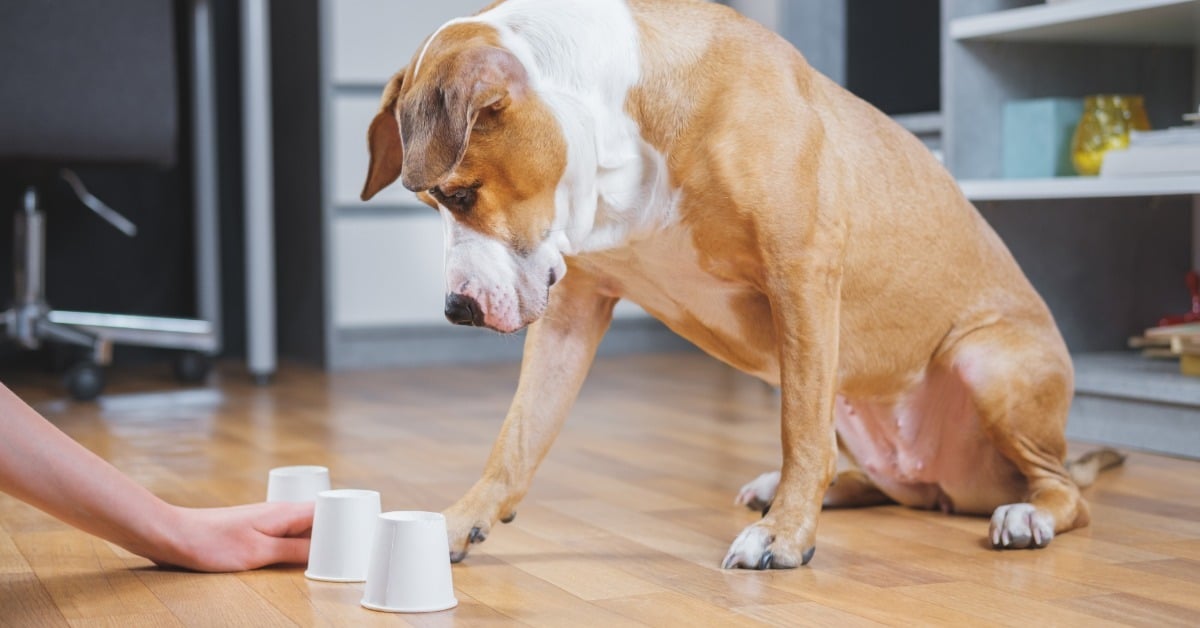
The easiest way to tire out a dog indoors is to make the dog think, not just move. Ten to fifteen minutes of focused brain work, such as a find-it game, a short training session or working for part of a meal, can settle a dog as well as a long walk. Mix two or three short sessions into each day, keep them calm, and finish before your dog gets overexcited.
The clocks went back on November 1, and for most of Canada that means dark mornings, dark evenings and shorter walks until spring. Your dog’s need for activity does not shrink with the daylight. When a dog’s body and brain have nothing to do, that energy usually comes out as chewing, barking, pacing, zoomies or pestering you all evening. This guide explains why mental stimulation matters so much in the dark months, how to tell if your dog needs more of it, and the indoor games we recommend for every age and energy level.
Why mental stimulation matters as much as exercise
People bred dogs to do jobs: herding, retrieving, guarding, hunting, digging and following a scent for hours. Most pet dogs today have no job at all. A walk takes care of the body, but a dog also needs to use its nose, solve problems and make decisions. That kind of work tires a dog in a different way, and it often leaves the dog calmer than physical exercise alone.
There is a second benefit. A dog that spends a few minutes each day learning from you and working with you starts to look to you for direction. That habit carries over into everyday life, from greeting visitors to settling when you ask.
Signs your dog might need more brain work
- Chewing furniture, shoes or door frames, or destroying things when home alone
- Barking at every small sound or at nothing in particular
- Pacing, whining or following you from room to room all evening
- Nudging, pawing or bringing you toys over and over
- Restlessness at night or waking the household early
Any of these can also have other causes, including pain or anxiety, so speak to your vet if the change is sudden. But in November, a bored dog is the most common explanation.
Our favourite indoor games for the dark months
1. Find it
Ask your dog to wait while you place a favourite toy in plain sight a few steps away. Say “find it” and let your dog go and get it. Once your dog understands the game, hide the toy behind a door, under a cushion or in another room. Nose work is one of the most tiring things a dog can do, and it suits dogs of every age. Our scent games guide has more ways to build on it.
2. Hide and seek with the family
One person distracts your dog while another family member hides. The hidden person calls your dog once, then stays quiet. When your dog finds them, celebrate with calm praise and a quick play. This game builds a better recall at the same time, which pays off on every winter walk.
3. Work for part of a meal
Instead of putting your dog’s whole dinner in a bowl, use part of it for a puzzle feeder, a snuffle mat or a few handfuls scattered across a clean floor or a towel. Your dog uses their nose and their brain to earn the meal they would have eaten anyway, so nothing extra goes into the diet.
4. The cup game
Place a small toy under one of three upturned plastic cups while your dog watches, slide the cups around slowly and let your dog choose. Start with one cup and build up. It looks simple, but it asks your dog to watch, remember and decide.
5. Five-minute training sessions
Short sessions spread through the day work better than one long lesson. Practise the basics in new places around the house: sit at the top of the stairs, a down on the kitchen mat, a wait at the back door, a come from another room. Then add something new, like going to their bed on cue, a spin or a paw. Keep every session short, calm and successful, and end before your dog loses interest.
6. Name the toys
Pick one toy, give it a name and use that name every time you play with it. Once your dog brings it on request, add a second toy and ask for one or the other. Some dogs learn the names of a surprising number of toys, and the game keeps them thinking for weeks.
7. An indoor obstacle course
Cushions to step over, a broom handle across two books to hop, a chair to walk around and a blanket tunnel make a simple course in a hallway. Go slowly, keep jumps very low and use a non-slip surface. This one suits young, healthy dogs best. Skip it for dogs with joint problems and for puppies whose joints are still growing.
For even more ideas, see our earlier posts on keeping your dog entertained during the indoor months and games to play in the snow once the snow arrives.
How much mental stimulation does a dog need?
There is no single number, because age, breed and energy level all play a part. As a starting point, aim for two or three short sessions of brain work a day on top of your usual walks, and watch how your dog responds.
- Puppies learn fast but tire fast. Keep games to a few minutes, then let them nap.
- Working and herding breeds such as Border Collies, Australian Shepherds and German Shepherds usually need more, and they get creative when they do not get it.
- Senior dogs still need to use their brains, and gentle nose games help keep them sharp. Our senior dog guide covers how to adapt activities as your dog ages.
A dog that has had enough will usually lie down, stretch out and sleep. A dog that gets more wound up during a game needs a calmer game, or a shorter one.
Common mistakes to avoid
Replacing walks entirely. Brain games add to outdoor time. They do not completely replace it. A short walk in the dark still gives your dog fresh smells, a chance to relieve themselves and time with you. Our guide to walking your dog in the dark covers how to stay safe and visible.
Laser pointers. Your dog can never catch the dot, and some dogs start chasing lights and shadows obsessively. Choose games with a clear finish instead.
Overstimulating. For most dogs 10-20 min of brain work is enough. End on a good note, then let your dog settle. You do not need to keep a three-ring circus going for your dog, constantly.
Wild games before bed. Save energetic games for earlier in the evening, and finish the day with something slow, like a gentle find-it or a chew, so your dog settles for the night.
Leaving puzzle toys out all day. Toys stay interesting when they come out for a session and then go away. Rotate a few toys each week instead of leaving everything on the floor.
Using games to fix a behaviour problem. Mental stimulation reduces boredom, but it will not solve separation anxiety, reactivity or aggression on its own. Those problems need a clear plan. If your dog struggles when you leave, read our guide to leaving your dog home alone.
How Bark Busters can help
If your dog is still bouncing off the walls after walks and games, or the boredom has already turned into chewing, barking or demanding behaviour, our trainers can help. We come to your home, see how your dog behaves in the space where the problems happen, and show the whole family how to give your dog structure, calm leadership and the right kind of activity. Every program includes our Life Of Dog Support Guarantee. Use find a trainer to reach your local Bark Busters trainer.
Frequently asked questions
How do you tire out a dog indoors?
Give your dog things to think about, not just room to run. Nose games like find-it, short training sessions, puzzle feeders using part of a meal and hide and seek with the family all work your dog’s brain, and two or three short sessions a day will settle most dogs.
Is mental stimulation as tiring as a walk for a dog?
For many dogs, 10 to 20 minutes of focused brain work leaves them as settled as a much longer walk. Your dog still needs time outdoors, so use brain games alongside walks, not instead of them.
What are good brain games for a dog in winter?
Find-it with a favourite toy, the cup game, naming toys, or a gentle indoor obstacle course all work well indoors. Once the snow arrives, a few outdoor snow games add variety.
Why is my dog more restless in the winter?
Shorter days usually mean shorter walks and less time outside, while your dog’s energy stays the same. That leftover energy often shows up as pacing, barking, chewing or zoomies. Adding daily brain work usually helps within a week or two.
Free guide: Want more games to keep your dog busy this winter? Download our Indoor Games to Play with Your Dog guide (PDF) for easy games you can play at home on dark evenings. You can find more handouts on our Free Dog Training Resources page.
Find Your Local Trainer