




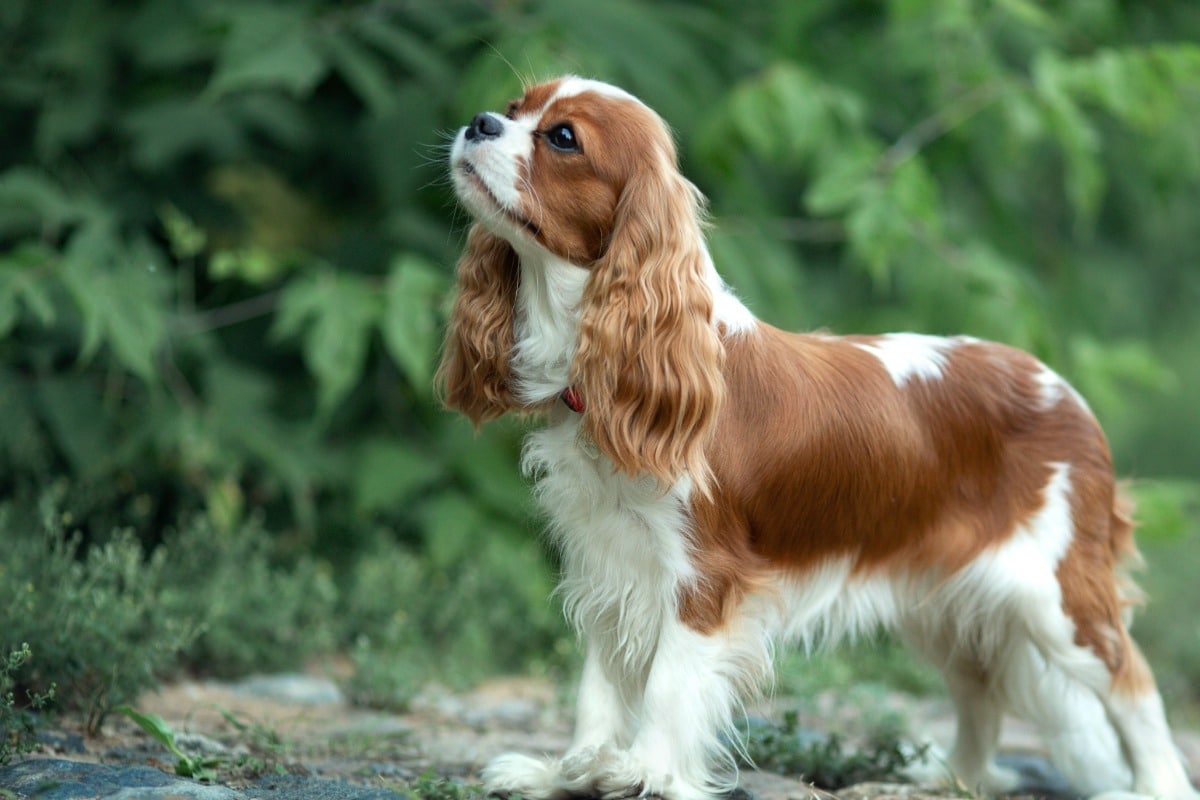
Cavalier King Charles Spaniel at a Glance
- CKC group Toy Dogs
- Origin England, recreated in the 1920s to 1940s
- Bred for Companionship
- Height 30.5 to 33 cm (12 to 13 in)
- Weight 6.25 to 8.25 kg (14 to 18 lb)
- Coat Long and silky with feathering, free from curl
- Colours Blenheim, tricolour, ruby, or black and tan. The CKC standard does not recognize other colours.
- Grooming Regular brushing, no trimming
- Popularity #8 in Canada (CKC 2025)
Average Ratings
1 = low, 5 = high. Ratings reflect the typical experience with Cavaliers in Canadian homes. Every dog will have some individual variations.
Breed facts: Canadian Kennel Club Cavalier King Charles Spaniel profile and breed standard.
Gentle and affectionate, Cavalier King Charles Spaniels usually choose a spot beside their favourite person. The breed placed eighth in the Canadian Kennel Club’s registration rankings for 2025, appealing to families, retirees and people living in condos. Their old nickname, “comforter” spaniels, still captures their love of close company. That attachment can also bring challenges, including distress during absences, indoor accidents and jumping for cuddles. Their sporting ancestry adds an urge to pursue squirrels and birds. With steady guidance, everyday outings, playful activities and household rules everyone follows, a Cavalier can become a delightful companion who settles comfortably into family life.
What the Cavalier King Charles Spaniel was bred to do
Small spaniels were favourites at the English royal court for centuries, and King Charles II loved them so much that the breed took his name. Over time, fashion changed, and breeders crossed the little spaniels with flat faced breeds until the original look almost disappeared. In 1926, an American visitor offered prize money at Crufts for spaniels that looked like the dogs in old royal portraits. British breeders took up the challenge, and by 1945 the recreated breed had its own name: the Cavalier King Charles Spaniel.
Royal lapdog roots help explain why your Cavalier follows you from room to room. Their sporting ancestors also left a taste for interesting scents and fluttering birds. These two sides live together in one small companion, eager to explore outdoors but often uncomfortable without their people nearby.
What a Cavalier is like to live with
In the Canadian Kennel Club’s description, Cavaliers combine affection and gentleness with a cheerful, fearless sporting spirit. They generally welcome adults and children, share space comfortably with other pets and relax inside. Usually fairly quiet, these small spaniels can fit daily activity into an ordinary household routine.
The flip side is that Cavaliers bond very closely with their family. Many follow their people everywhere and struggle when everyone leaves. Their soft nature also means harsh corrections backfire. A worried Cavalier shuts down rather than learns.
Common Cavalier behaviour problems and how to fix them
Struggling when left alone
For the company-loving Cavalier, time apart is the concern owners bring to us most often. Distress can show up as barking, damaged belongings or indoor accidents while nobody is home. Practise very short absences first, adding time gradually. Make leaving and returning uneventful, and plan a walk plus some play before heading out. Our home-alone preparation guide covers useful groundwork for your spaniel, while our explanation of separation anxiety explores why being apart can feel so difficult.
Toilet training setbacks
A Cavalier’s small bladder means frequent outdoor opportunities matter, even when rain or snow makes the doorstep unappealing. Choose a familiar toilet area and visit at predictable intervals. Offer soft praise immediately after they finish, then watch closely back inside to prevent missed signals. Our puppy toilet training resource walks through the process, with advice for Canada’s colder months.
Chasing birds, squirrels and cats
A Cavalier may look like a lapdog, but a squirrel can quickly awaken their spaniel instincts. Once they rush after wildlife, your voice may lose its pull, especially dangerously beside traffic. Redirect their attention before pursuit starts, and build recall skills somewhere quiet. We explain the groundwork in our reliable recall guide, alongside advice for preventing cat chasing at home.
Jumping and demanding attention
Picking up a Cavalier whenever they paw, whine or bounce against your legs can teach them to demand cuddles. Agree on a quiet, consistent response throughout the household. Wait for grounded paws and a settled greeting before offering affection. For a closer look at this attention-seeking habit, see our explanation of why dogs jump up at people.
Begging and food obsession
Many Cavaliers adore food and master the sad eyed stare at the dinner table. Every scrap teaches your dog to keep asking, and extra weight hurts a small dog’s health. Decide as a family that nobody feeds from the table, and calmly claim the dining area as your space during meals.
Sensitivity and nervousness
A sensitive Cavalier may retreat from lively guests, flinch at sudden sounds or shake during veterinary visits. Shouting and household commotion can add to their worry. Use a reassuring tone and allow space to observe unfamiliar situations without pressure. Acknowledge small steps towards confidence with gentle praise. Our guide for supporting fearful dogs offers a fuller approach.
Exercise and mental work for a Cavalier
Cavaliers need less exercise than sporting breeds, but they still need daily walks and play to stay fit and settled. Mix gentle exercise with brain work:
- Neighbourhood outings give your Cavalier chances to investigate scents while learning to stay beside you on a loose leash. For practical walking guidance, explore our advice on reducing leash pulling.
- Indoor sniffing challenges let your Cavalier use their spaniel nose to find a favourite hidden toy.
- Gentle retrieve games with soft toys.
- Short training sessions through the day, which Cavaliers enjoy when the tone stays calm and kind.
Cavaliers and Canadian winters
Silky feathering does not make a Cavalier winterproof. Their little frame can chill quickly, so shorten outings during severe cold. Remove snow clumps caught around their feet and legs, and wash away pavement salt after walks. On dark evenings, use toy searches and brief indoor lessons to keep them occupied. Our winter routine ideas for shorter outings offer more options.
Cavaliers in condos and apartments
Condo living often suits a Cavalier’s size and relatively quiet manner. Regular walks and home play can meet their activity needs. Begin early with brief separations, relaxed elevator rides and polite encounters along shared corridors.
Grooming and health basics
Long, silky hair and feathered ears, limbs, feet and tail give Cavaliers their distinctive look. Their breed standard specifies an untrimmed coat. Brush several times weekly, paying particular attention to tangles behind those long ears, and inspect the ears routinely. Measure portions to help maintain a lean body rather than letting their pleading expression dictate meals. Your veterinarian can recommend a suitable weight and explain which breed-related health checks to consider, including heart checks. If you are looking for a Cavalier puppy, allow plenty of time to research breeders and ask about responsible breeding practices.
Is a Cavalier King Charles Spaniel right for you?
A Cavalier suits you if you:
- Want a gentle, affectionate companion who loves to be close
- Can offer companionship through a good portion of each day
- Prefer moderate walks to long runs
- Can keep up with regular brushing
Before choosing this company-loving spaniel, consider who will provide companionship if everyone regularly spends most daylight hours away.
How Bark Busters helps Cavalier owners
We teach in your home, where your Cavalier asks for cuddles, greets guests and watches family meals. Everyone learns together, using deliberate movements, clear body language and a steady voice to guide behaviour at home and on walks. With this sensitive spaniel, gentle communication works better than confrontation. Many households see worthwhile changes in their Cavalier’s responses during the first lesson.
Our Life Of Dog Support Guarantee comes with every program. From your Cavalier’s early toilet training to quieter senior years, your trainer remains available to help you adapt as your companion’s needs change.
Cavalier King Charles Spaniel FAQs
Are Cavaliers easy to train?
Yes. Cavaliers want to please and learn well with calm, kind, consistent training. Harsh corrections make them worried, not obedient.
Are Cavaliers frequent barkers?
Generally, no. The Canadian Kennel Club characterizes Cavaliers as relatively quiet companions. Repeated barking may signal boredom or difficulty coping when their people leave.
How do Cavaliers get along with children?
They often make affectionate family companions. Protect their small frame by having children cuddle while seated at floor level, and always oversee toddler interactions.
How much solitude can Cavaliers handle?
Gradually introduce brief absences. Their companion-dog nature generally suits households that can provide company throughout a substantial part of each day.
Does condo living suit a Cavalier?
Yes. Provide everyday walks, help them relax during absences and teach a quiet response to sounds outside the unit.
Comparing a Cavalier with another companion? Browse our breed training library and explore how breed influences behaviour.
Find Your Local Trainer