




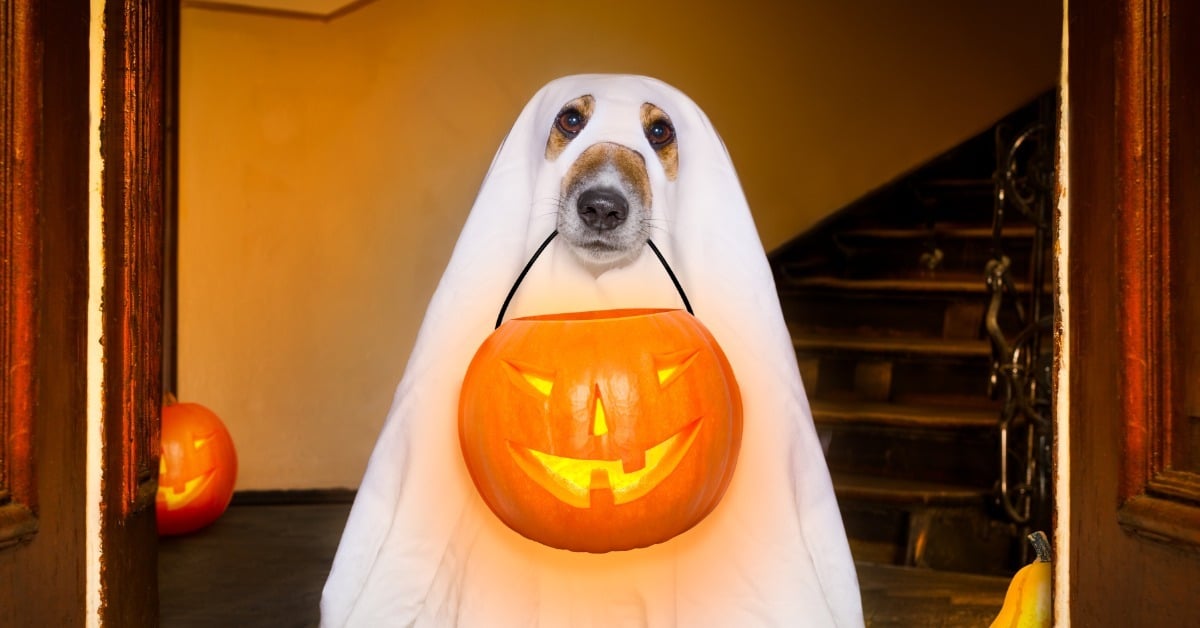
To keep your dog safe on Halloween, keep your dog indoors in a quiet room away from the front door, keep all candy and wrappers out of reach, and swap real candles for battery ones. Act normally so your dog takes its cue from you, skip the dog costume unless your dog truly enjoys it, and make sure your dog’s ID and microchip details are current in case of a door dash. Most Halloween emergencies come from three things: chocolate or sugar-free candy, an open front door, and a frightened dog that nobody noticed.
Halloween falls on a Saturday this year, so many neighbourhoods will see a longer evening of trick-or-treaters, and parties on Friday night too. For us it is a fun night. For a dog it means dozens of strangers in odd shapes, a doorbell that never stops, shrieks, glowing decorations and a house full of food that can make it seriously ill. This guide covers everything you need to plan, from the week before to the morning after.
Why Halloween is hard on dogs
Dogs read the world through routine, faces, body language and smell. Halloween scrambles all of it at once.
A parade of strangers. Dogs naturally want to protect the home and family, and on Halloween strangers come to the door all evening. A dog that copes with one visitor can wind up tighter with every knock.
Faces they cannot read. Masks, face paint, hoods and wings hide the cues dogs rely on to judge whether a person is friendly. Even a family member can suddenly look like a stranger. Our Friday post, Why Is My Dog Scared of Costumes and Masks?, goes deeper into this.
Noise and surprise. Doorbells, knocking, screaming kids, animated decorations that cackle when something walks past, and in some parts of Canada, Halloween fireworks.
Darkness. In most of Canada it is dark well before trick-or-treating ends. Shapes appear out of the dark at the door, and the evening walk often clashes with the busiest hour on the street.
The week before Halloween
1. Decide where your dog will spend the evening. Pick a quiet room at the back of the house, away from the front door. Make it comfortable with your dog’s bed, water and something to chew, and spend a few calm sessions there with your dog before the big night so the room feels normal, not like a punishment.
2. Practise the doorbell. Have a family member ring the bell or knock while you calmly show your dog what you want: settle, stay back from the door, and leave the greeting to you. Short, repeated sessions over several days work far better than one long one. Our doorbell barking guide walks through this step by step.
3. Introduce costumes early. Leave costume pieces and masks on a chair so your dog can sniff them while nobody wears them. Then let your dog watch a family member put a costume on and take it off again, speaking in a normal voice the whole time.
4. Check ID and microchip details. Make sure your dog wears current ID and that the contact details linked to the microchip are up to date. An open door and a frightened dog is how many dogs go missing on Halloween.
5. Plan the walk. Give your dog a good walk and some mental work before the trick-or-treaters start, so your dog goes into the evening tired and settled rather than restless.
On Halloween night
Keep your dog inside. Even a dog with a fenced yard belongs indoors on Halloween. Kids cut across lawns, pranksters open gates, and a dog alone outside hears every shriek on the street with nobody there to help.
Use the quiet room before the first knock. Settle your dog in its room before trick-or-treating starts, not after your dog has already worked itself up. Close the door or use a gate, turn on a radio or TV for background noise, and check in calmly now and then.
Take the doorbell out of the evening. Many families sit on the porch or in the driveway and hand out candy there, which keeps the doorbell quiet and the door closed. Others leave a bowl outside with a sign. A simple note asking visitors not to ring helps too.
Watch the door. Every time the door opens, know exactly where your dog is. If your dog stays in the main part of the house, put a gate between the dog and the entrance so an excited or nervous dog cannot slip out between costumes.
Act normally. Dogs take their cue from us. Fussing, cooing and constant reassurance can tell a nervous dog that something really is wrong. Stay calm, go about your evening, and show your dog through your own behaviour that you have the situation handled.
Never force a scared dog to greet. If your dog wants to retreat, let it. Pushing a frightened dog toward a stranger in a mask can turn fear into a growl or a snap, and one bad night can create a fear of visitors that lasts long after Halloween.
Candy and food dangers
Halloween candy is the biggest health risk of the night. Keep the candy bowl, the kids’ haul and every wrapper well out of your dog’s reach, and remind children not to share treats with the dog.
- Chocolate. Chocolate is toxic to dogs. Dark and baking chocolate are the most dangerous, but milk chocolate can still make a small dog very sick.
- Sugar-free candy and gum. Many contain xylitol, a sweetener that can cause a dangerous drop in blood sugar and liver damage in dogs, even in small amounts.
- Raisins. Those little Halloween boxes of raisins can cause kidney failure in some dogs.
- Wrappers and lollipop sticks. Dogs that gulp candy often swallow the wrapper or stick too, which can block the gut.
- Glow sticks. The liquid inside tastes bitter and can cause drooling and upset, and chewed plastic shards can cause injury.
If you think your dog has eaten any of these, call your vet or the nearest emergency animal hospital straight away. Do not wait for symptoms, and have the wrapper handy so you can say what and how much your dog ate.
Decorations and costumes
Candles and jack-o’-lanterns. A wagging tail and a lit candle do not mix. Use battery candles, or keep lit pumpkins well out of reach.
Animated and noisy decorations. Motion-triggered skeletons and screaming props can frighten a dog every time it walks past. Keep them out of your dog’s daily routes, or switch them off.
Cords and fake cobwebs. Puppies and chewers can tangle themselves in stretchy cobwebs* or chew through light cords. Keep both off the floor.
*Fake cobwebs are also dangerous to local wildlife. Birds, bats & insects can easily get stuck in these. Avoid entirely, or keep indoors, out of reach of household pets.
Pumpkins and corn. A rotting pumpkin can grow mould, and corn cobs from autumn displays are a known cause of blockages.
Costumes on dogs. Some dogs enjoy a simple bandana. Many dogs do not enjoy dressing up at all. If you want to try, test it days ahead, keep it loose, and never cover your dog’s eyes, ears, nose or mouth. Signs of stress such as freezing, lip licking, yawning, a tucked tail or trying to back out of the outfit mean the costume comes off. Our guide to dog body language shows the signs to look for.
Should your dog come trick-or-treating?
For most dogs, the answer is no. Sudden scares, strange costumes, crowds of excited kids and dropped candy on every sidewalk make it a stressful outing, and one frightening encounter can start a lasting fear of strangers. Your dog will be happier at home in its quiet room.
If your dog is very confident and you still want to bring it along, keep the outing short, go early before the streets get busy, keep your dog close by your side, and do not let strangers in costume approach without your OK. Stay on the sidewalk rather than walking up to doors, and head home at the first sign of worry.
The morning after
November 1 brings its own risks. Sidewalks and lawns are full of dropped candy and wrappers, so keep a close eye on your dog on the morning walk. Clocks also fall back an hour on Sunday, November 1, so the evening walk suddenly happens in the dark. If your dog was on edge the night before, give it an easy, predictable day to settle.
Mistakes to avoid
Leaving the dog in the yard “just for a bit.” Halloween is one of the easiest nights for a dog to escape or get teased.
Waiting until your dog is already upset. Once a dog is barking at every knock, it is much harder to settle. Start the plan before the first trick-or-treater.
Assuming last year will repeat itself. A dog that coped last year may be older, more sensitive or newly fearful. Always watch what your dog is telling you in the moment.
When to call a trainer
If your dog panics, barks nonstop, growls or lunges at visitors, or still seems nervous days after Halloween, the problem usually runs deeper than one night. The same fear often shows up with delivery drivers, guests and people in hats or hoods all year round. Our guide to helping a fearful dog explains why, and our fireworks anxiety guide helps if your area celebrates with fireworks.
Bark Busters trainers work with you in your own home, where the doorbell, the front door and the visitors actually are. We show the whole family how to communicate with your dog in a way it understands, so your dog learns to trust you to handle the door. Every program includes our Life Of Dog Support Guarantee, so your trainer stays with you for the life of your dog. To book, visit find a trainer.
Frequently asked questions
How do you keep a dog calm on Halloween?
Give your dog a good walk before dark, settle it in a quiet room away from the front door before trick-or-treating starts, play background noise, keep the doorbell quiet by handing out candy outside, and stay calm and normal yourself. Practise the doorbell in the days before so the night holds fewer surprises.
What Halloween candy is dangerous for dogs?
Chocolate, especially dark and baking chocolate, sugar-free candy and gum containing xylitol, and raisins are the most dangerous. Wrappers and lollipop sticks can also cause blockages. If your dog eats any of these, call your vet or an emergency clinic right away.
Should you put a costume on your dog?
Only if your dog is clearly relaxed in it. Test it days ahead, keep it loose, and never cover the eyes, ears, nose or mouth. If your dog freezes, licks its lips, yawns or tries to back out of it, skip the costume.
Is it safe to take a dog trick-or-treating?
For most dogs, it is better to stay home. If your dog is very confident, keep the outing short and early, keep your dog close, stay on the sidewalk and do not let people in costume approach without your OK.
Free guide: Want a quick checklist for the big night? Download our Halloween Safety Tips guide (PDF) for a one-page list you can stick on the fridge. You can find more handouts on our Free Dog Training Resources page.
Find Your Local Trainer