




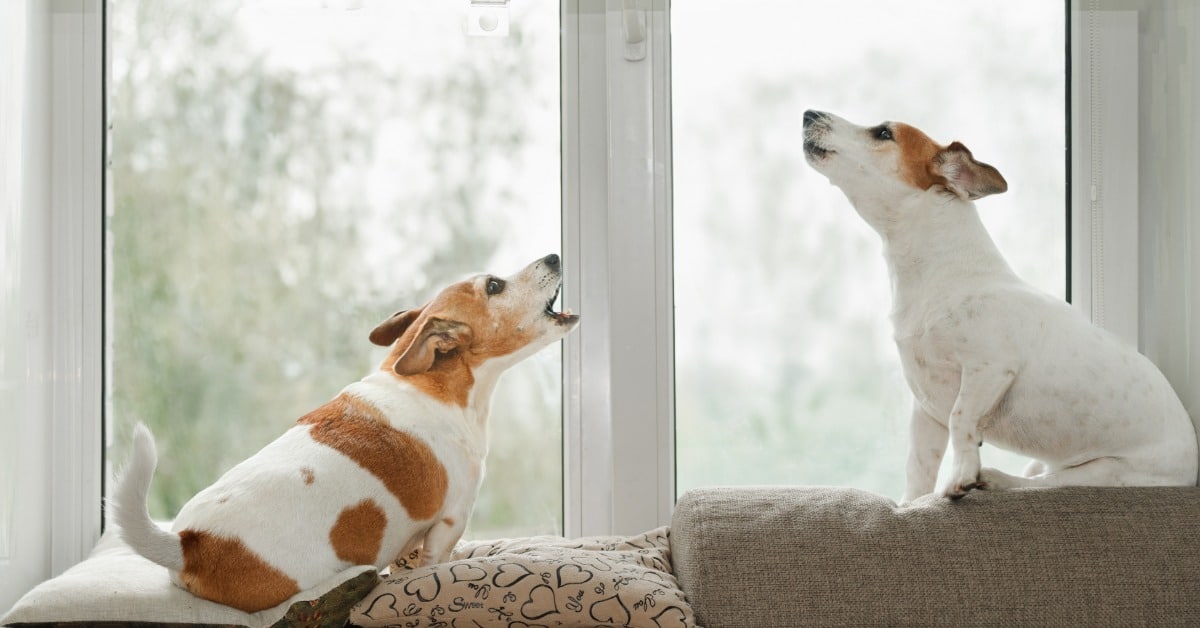
In Brampton, barking falls under the City’s Noise By-law 93-84, which bans “noises likely to disturb the inhabitants,” and the City’s own noise page lists “a dog barking daily and excessively” as one of the noises it prohibits. Brampton Animal Services does not take barking complaints. Neighbours call 311, keep a written noise record for 10 to 14 days, and a by-law officer then works with both sides. There is no set ticket for barking in Brampton, so a case that cannot settle goes to court, where the maximum fine is $5,000.
This is the sixth post in our series on the barking dog bylaw in each major city we serve. Every post explains what the local bylaw actually says, how a complaint works step by step, what it can cost, and how to fix the barking at home so it never gets that far. We check every fact against the city’s own bylaws and complaint pages, and we link our sources so you can check them too. So far we have covered Hamilton, Calgary, Toronto, St. Catharines and Edmonton. Next up is Brampton.
Brampton works differently from most of the cities in this series. Toronto and Edmonton write a set fine for barking on a ticket. Brampton relies on the neighbour’s own written record, an officer’s follow-up and, if nothing else works, a court date. That makes the first conversation between neighbours more important here than almost anywhere else.
What the Brampton bylaw actually says
Brampton’s Noise By-law 93-84 dates back to April 1984, and the current office consolidation includes amendments up to 2014. Section 1 says a person shall not, within the City of Brampton, “make, create, cause, or cause or permit to be made, noises likely to disturb the inhabitants.” Section 2 adds a second ban on “unusual noises.”
The by-law itself never mentions dogs. The City fills that gap on its Noise By-law page, which says Council passed the by-law to curb persistent and recurring noise that lasts longer than ten days, and lists “a dog barking daily and excessively” first among the noises the by-law specifically prohibits. In plain terms, the City treats barking as a noise problem when it happens day after day, not when a dog barks once at a delivery.
Notice the words “cause or permit.” The rule does not only cover the dog’s legal owner. If you rent, or if you are minding a friend’s dog for a few weeks, you can still be the person who permits the noise.
One exception is worth knowing. Section 4(3) allows the sound of any animal or bird in areas that the Official Plan or a zoning by-law designates mainly for agricultural use, but not in the hamlets and villages inside those areas. For almost every Brampton subdivision, townhouse row and condo, the barking rule applies in full.
Who handles a barking complaint
Barking does not go to Brampton Animal Services. The Animal Services FAQ says it does not respond to barking complaints because they fall under the Noise By-law, and it sends residents to the By-law Office through 311. Enforcement and By-law Services handles the file. You can reach them 24/7 by dialing 311 inside Brampton, 905-874-2000 from outside the city, or by email at 311@brampton.ca.
Peel Regional Police handle a different kind of noise: screaming, fighting, swearing and anything that may be a criminal offence. A barking dog is a by-law matter, not a police call.
How a barking complaint works in Brampton
1. The neighbour downloads the noise reporting package. The City’s process starts with paperwork, not a phone call to the owner. The package contains a Noise Report Witness Questionnaire and a Noise Report Record Form.
2. The neighbour keeps a record for 10 to 14 days. The City asks complainants to track the dates, times, description, duration and intensity of the noise, and how it interfered with their day. Each person in the household who keeps track signs a separate sheet. The City also encourages other neighbours to fill out their own package, and tells them they may have to go to court as witnesses.
3. The record goes to Enforcement and By-law Services. The neighbour mails, drops off or faxes the forms to 8850 McLaughlin Road South, Unit 2. The City keeps the complainant’s name, address and phone number confidential at this stage.
4. An officer reviews the evidence and makes contact. An Enforcement Officer contacts the person who complained to go over the record and talk about options. Often the officer then contacts the dog owner by phone, in person or in writing to find a friendly solution. The City says this approach usually works and resolves most complaints quickly.
5. A Notice of Violation and a second record. If the officer sees a reasonable prospect of a conviction, the City can issue a Notice of Violation to the property. The neighbour then keeps a second record over another two weeks.
6. Court. If the barking continues, the City can lay a charge, and the owner or the person responsible for the noise has to attend court. An officer makes reasonable efforts to visit and hear the noise first-hand. Every witness has to testify, and once the matter reaches court, the names of the complainant and the witnesses become part of the public record.
What it can cost
| Barking under the Noise By-law (93-84, s. 1) | No set fine or administrative penalty. The City’s penalty schedules do not list the Noise By-law, so a barking case goes to court. |
| Maximum fine on conviction | Up to $5,000, according to the City’s Noise By-law page. Section 5 sets the fine through the Provincial Offences Act. |
| Time | At least four weeks of records and follow-up before a charge, plus court dates you have to attend |
No ticket does not mean no consequences. A Brampton barking case can mean weeks of tension with the people next door, an officer at your door, a court appearance and a fine that a justice of the peace decides.
How common are noise complaints in Brampton?
Very common. In its 2024 Enforcement and By-law Annual Report, the City says officers received 6,988 noise complaints that year and responded to 93 per cent of them under the Noise By-law and the Public Nuisance By-law. Loud music made up more than 80 per cent of those complaints. The City does not publish a separate count for barking, but it lists excessive dog barking among the main complaint types its Municipal Enforcement Unit handles.
Brampton’s Animal Services By-law 201-2023 adds one more rule that matters for barking. A home can keep no more than three dogs over 12 weeks of age, and no more than six cats and dogs in total, unless the Manager of Animal Services grants a limited exemption. A multi-dog home is often the one the whole street hears, because one dog sets off the others.
If you are the neighbour
A calm conversation usually works faster than a formal complaint, and in Brampton the alternative is two weeks of paperwork and possibly a court date. Most owners have no idea their dog barks while they are out, so a friendly heads-up often solves the problem in a day. Give the owner specific details: what time the barking starts, how long it lasts and which days it happens. If you decide to file a complaint later, start your written log now, because the City asks for exactly that kind of detail.
Before you knock, have a look at our free Talking to a Neighbour About Barking guide (PDF). It shows you how to start with empathy, choose a calm moment and keep the tone friendly, so the conversation sounds like a heads-up rather than a complaint. It also lists what not to do, like leaving angry notes or banging on shared walls, and what to do if you rent and need to involve the building manager. In a city of townhouses and semis, you will likely share a wall or a fence with this neighbour for years, so a good first conversation is worth the effort.
If you are the owner: how to actually stop it
Hearing that a neighbour has complained is stressful, but it also tells you something useful: your dog is unsettled when you are not there. Barking is communication, and the fix depends on what your dog is trying to say.
Find out when it happens. Set up a phone or security camera for a few days while you are out. Barking that starts within minutes of you leaving points to separation stress. Barking at every passer-by, delivery or dog on the sidewalk is your dog guarding the territory. Barking at the back door is often boredom or wanting in.
Take away the job. A dog that watches the street from the front window all day has appointed itself head of security. Close the blinds, block the lookout spot or keep your dog in a quieter room while you are out.
Do not leave a barker outside alone. A dog alone in the backyard hears every car, cat and neighbour, with nobody there to redirect it. In the colder months, a dog you leave outside also has one more reason to bark at the door.
Meet the need before you leave. A proper walk and some mental work before a long absence makes a real difference for young and high-energy dogs, especially now that the clocks have gone back and evening walks get shorter.
Be the one in charge when you are home. Dogs that bark to warn you need to learn that you have heard them and you are handling it. Yelling back just sounds like you are barking too. Calm, consistent leadership in the moment is what changes the habit, and it is exactly what we teach in your home.
For more on specific types of barking, see our guides to why dogs bark and how to stop it, barking at the doorbell, separation anxiety and leaving your dog home alone.
Barking help in Brampton
We solve barking problems where they happen, which is in your home. Bark Busters trainers come to you, see the window, the yard and the triggers your dog reacts to, and show the whole family how to respond so your dog gets one consistent message.
Liza Fournier offers in-home dog training across Brampton and North Etobicoke. Call 647-321-9964 to book an in-home visit, or visit our Brampton dog training page. Outside the Brampton area, use find a trainer to reach your local Bark Busters trainer. If you live in Etobicoke, the City of Toronto’s rules apply instead, and our Toronto barking bylaw guide explains them.
Every Bark Busters program includes our Life Of Dog Support Guarantee, so your trainer stays with you and your dog for life, not just for the first lesson.
Frequently asked questions
Who do you call about a barking dog in Brampton?
Call 311 inside Brampton, or 905-874-2000 from outside the city, and ask for Enforcement and By-law Services. Brampton Animal Services does not handle barking, and Peel Regional Police only handle noise that may be criminal, such as fighting or shouting.
How long does a dog have to bark to break the Brampton bylaw?
The by-law does not set a number of minutes. The City describes the target as persistent, recurring noise, and lists a dog barking “daily and excessively.” That is why the City asks complainants to keep a record for 10 to 14 days before it moves forward.
What is the fine for a barking dog in Brampton?
Brampton has no set fine or administrative penalty for barking. If a case reaches court and the court convicts the owner, the City’s Noise By-law page lists a maximum fine of $5,000.
Will my neighbour know who complained?
The City keeps the complainant’s name, address and phone number confidential when it receives a complaint. If the matter goes to court, the names of the complainant and any witnesses become part of the public record.
Bylaw details from the City of Brampton Noise By-law 93-84 (office consolidation, s. 1, 2, 4 and 5), the City’s Noise By-law page and Noise Reporting Package, the Animal Services FAQs, Animal Services By-law 201-2023 (s. 25 and 27), the Administrative Penalties (Non-Parking) By-law 218-2019 schedule and the 2024 Enforcement and By-law Annual Report, checked October 2026. Rules and penalties can change, so confirm current details with the City.
Free guide: Need to raise barking with a neighbour, or hearing about it from one? Download our Talking to a Neighbour About Barking guide (PDF) for calm, practical steps to make that conversation go well. You can find more handouts on our Free Dog Training Resources page.
Find Your Local Trainer