




The most effective methods to train a German Shepherd puppy from the start include understanding that German Shepherds mature more slowly, mentally, than other breeds (a one-year-old German Shepherd is still very much mentally a puppy), prioritizing supervision and containment, starting socialization early, and recognizing that this intelligent breed needs consistent guidance.
At Bark Busters, we work with German Shepherd families across Canada who want to raise confident, well-behaved dogs. Here’s what you need to know about training this remarkable breed.
Key Takeaways
• German Shepherds mature more slowly mentally than other breeds. A one-year-old GSD is still a puppy in their brain
• All puppies nip; GSD puppies aren’t necessarily worse than other breeds, but they can be bigger
• Don’t believe the hype. Your 12-week-old puppy isn’t a “ticking time bomb” for socialization—but you do want to introduce reasonable stimuli and situations early and regularly.
• A dog that barks at everything is not a good guard dog; this is a training issue, not a protective instinct
• Supervision or containment is essential: your puppy should either be watched or in their safe space
• Leash skills develop over time with consistency; short sessions close to home beat long, poorly-performed walks
What Makes German Shepherd Puppy Training Different?
German Shepherds are exceptionally intelligent, which is both a blessing and a consideration for training. Their brains are building something more complex, and that takes time.
German Shepherds mature more slowly than other dogs, mentally. While many breeds reach adult mental maturity around one year, German Shepherds may not reach full mental maturity until age three.
This slower development means you’ll see extended adolescence—the “teenage” phase where your dog may seem to forget things they previously knew. This is normal. Stay consistent and patient. The payoff is a highly trainable dog who can learn complex tasks and genuinely wants to work with you.
The flip side of their intelligence is that they’ll pick up bad habits just as quickly as good ones if given the opportunity. This is why consistent rules from day one matter so much.
The Truth About German Shepherd Puppy Biting and Mouthing
“Is the biting worse with German Shepherds?” is one of the most common questions we hear from new GSD owners.
The reality: All puppies nip. Some individual puppies are nippier than others, but this isn’t always breed-specific. What is breed-specific is that German Shepherd puppies grow into large dogs with powerful jaws (every breed brings its own considerations, and our Australian Shepherd training guide shows how different a high energy herding breed can be)—so addressing mouthing early matters more than it might with a smaller breed.
Don’t wait for your puppy to “grow out of it.” While maturity helps, you also need to actively teach your German Shepherd that mouthing people isn’t acceptable. A mouthy 10-week-old puppy is manageable; a mouthy 70lb adolescent is less cute.
The key is redirection and consistency. When your puppy mouths, redirect to an appropriate chew toy. If mouthing continues, calmly end the interaction. They’ll learn that mouthing ends the fun.
Socialization: You Haven’t Failed at 12 Weeks
Many new German Shepherd (GSD) owners panic when they hear about the “16-week socialization window.” They have a 12-week-old puppy who hasn’t met many people or dogs yet, and they’re convinced they’ve already failed.
Here’s the truth: your puppy isn’t a ticking time bomb.
Yes, early socialization matters. But remember what we said about German Shepherds developing more slowly? This actually works in your favour. The window isn’t as rigid as some sources suggest, and you have more flexibility than you might think.
What proper socialization looks like for a naturally protective breed isn’t about forcing your puppy to meet as many people and dogs as possible. It’s about controlled, positive exposure that builds confidence without overwhelming them.
The goal isn’t to create a dog who loves everyone. German Shepherds can be more reserved than some breeds—that’s part of what makes them good protectors. The goal is a dog who can remain calm and neutral in various situations, who looks to you to tell the difference between a genuine threat and normal life.
Focus on quality over quantity. A few positive, calm interactions with different types of people are more valuable than dozens of overwhelming encounters at a busy pet store.
Early Warning Signs of Future Problems
How do you know if your German Shepherd puppy is heading toward fear-based reactivity or aggression rather than developing normal protective instincts?
Watch for these warning signs:
• Avoiding people or other pets
• Barking and then running away (this combination suggests fear, not confidence)
• Inability to recover from startling experiences
• Escalating reactions to normal stimuli over time
A confident German Shepherd may be reserved with strangers, but they don’t need to flee or bark frantically. Fear-based behaviour often looks like “protection” to inexperienced owners, but there’s a crucial difference: a confident dog can assess a situation calmly, while a fearful dog reacts first and thinks later.
If you’re seeing these patterns, address them early. Fear-based issues are much easier to resolve in puppyhood than after months or years of practice.
The Number One Training Mistake to Avoid
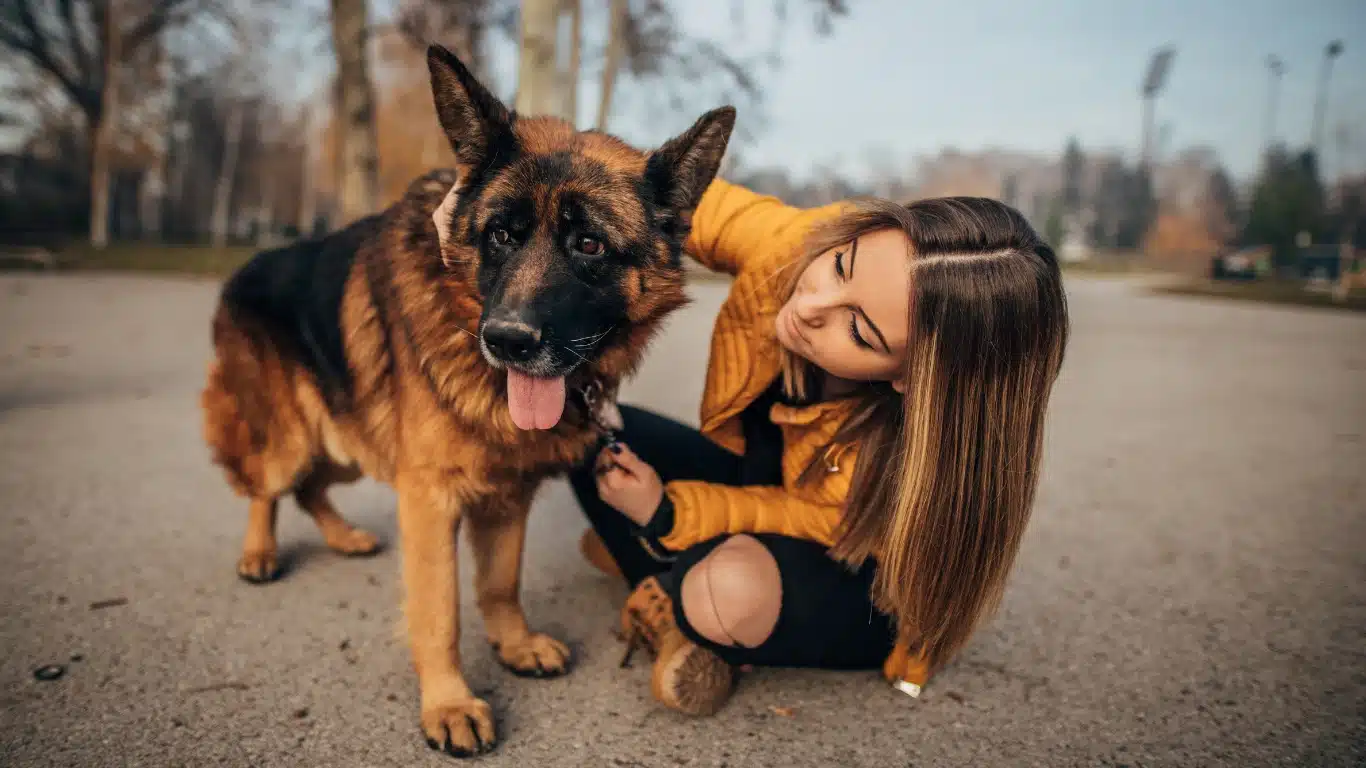
What behavioural issues do we see in adult German Shepherds that trace back to poor puppy training? The most common one might surprise you.
Thinking that barking at everything is normal.
Many German Shepherd owners assume that because German Shepherds are “protective,” constant barking at every noise, every passerby, and every delivery truck is just the breed doing its job.
It isn’t. A dog that barks at everything is not a good guard dog.
That’s like a smoke alarm that goes off every time you turn the oven on.
A well-trained German Shepherd can discriminate between actual concerns and normal daily life. They don’t need to alert you to every leaf blowing past the window or every neighbour walking their dog. A dog who reacts to everything is operating on anxiety, not protection—and they’re much less useful if an actual threat ever arrives because you’ve learned to tune them out.
Address excessive barking early. Teach your puppy that not everything requires a reaction, and that looking to you for guidance is the appropriate response to novel situations.
“My Puppy Is a Tornado”: Understanding German Shepherd Energy
Jumping, biting, running, and chewing everything in sight. Is this typical German Shepherd energy, or are you doing something wrong?
Here’s the reassuring truth: Puppies are going to make mistakes, even if you’re doing your best with training. This is all part of the process.
German Shepherds are high-energy working dogs. They were bred to be active and engaged. A puppy with boundless energy isn’t a sign that something is wrong—it’s a sign that you have a German Shepherd.
The key is management. Make sure you are either supervising your puppy OR the puppy is contained in their safe space. Those are your two options. A puppy who has unsupervised access to your home will find things to chew, destroy, and get into. That’s not a training failure; that’s a management failure.
When you can actively supervise, you can correct and redirect inappropriate behaviour in the moment. When you can’t supervise, your puppy should be in their crate, pen, or puppy-proofed space where they can’t practice unwanted behaviours – and get the rest they need.
Leash Walking: It Gets Better (With the Right Approach)
“He pulls like crazy. Will this get worse as he gets bigger?”
Yes, it will get worse if you don’t address it. A small puppy who pulls is manageable; a 80lb adolescent who pulls is exhausting and potentially dangerous.
But here’s what many new GSD owners don’t realize: puppies develop focus and leash abilities over time, with consistency. You’re not going to have perfect loose-leash walking from a 12-week-old puppy. Their attention span isn’t there yet.
The solution isn’t long walks where your puppy practices pulling the entire time. Instead:
• Stay close to home in the early months
• Focus on teaching the skills in short, controlled sessions
• Use leash games and exercises appropriate for their age
• Prioritize the quality of walking over the quantity of distance
A ten-minute walk where your puppy learns to check in with you is more valuable than an hour-long walk where they drag you down the street the entire time. The key is consistency over time, not marathon training sessions.
When German Shepherd Puppies Are Too Rough With Kids
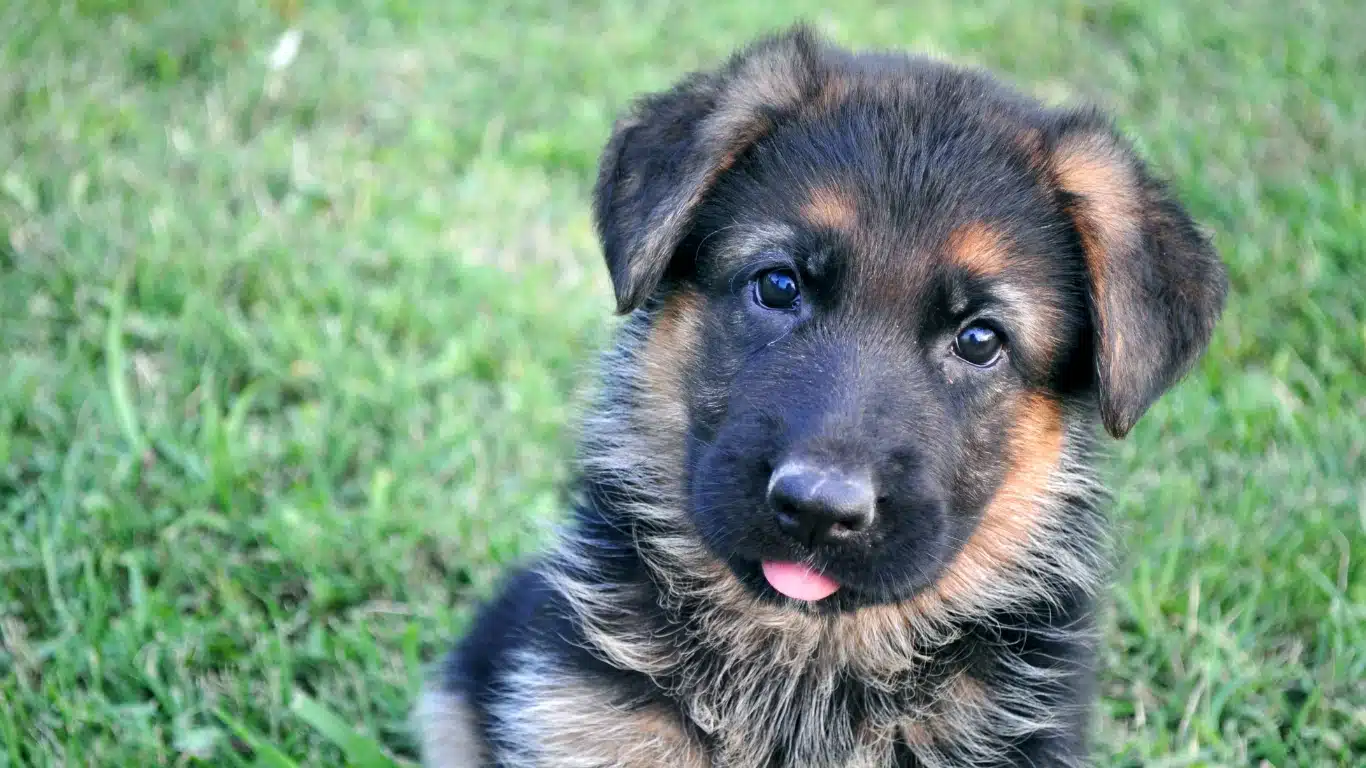
“He’s mouthy with the kids, not aggressive, but too rough. The kids are scared of him now.”
This is a common scenario, and it needs to be addressed before someone gets hurt. A large-breed puppy who thinks rough play is acceptable with children can cause real injuries, even without aggressive intent.
The solution: supervision and management.
Avoid rough play with a very nippy puppy—this applies to adults and children alike. Rough play teaches your puppy that using their mouth on people is part of the game. It’s not.
Supervise all interactions between your puppy and children. This means active supervision—you’re watching and ready to intervene, not scrolling your phone while they’re in the same room.
When your puppy gets too mouthy, calmly end the interaction. The puppy goes to their safe space, or the children move to a puppy-free area. No drama, no yelling—just a clear consequence that rough behaviour ends the fun.
Teach your children appropriate ways to interact with the puppy and how to disengage when things get too intense. Both the puppy and the children need guidance here.
In-Home Training: Why It Matters for GSDs
Should you do puppy classes or in-home training for a German Shepherd?
Of course, we recommend in-home training—that’s what we do. But here’s why it’s particularly valuable for this breed:
German Shepherds are context-learners. They learn behaviours in specific environments, and they don’t always generalize well to new situations. A puppy who sits perfectly in a training facility may completely forget the command at home, where the distractions are different.
In-home training addresses behaviours where they actually happen. Door barking? We work on it at your door. Jumping on guests? We work on it with people coming into your home. Leash pulling? We work on it in your actual neighbourhood.
For a breed as intelligent and context-dependent as the German Shepherd, this approach often yields faster, more lasting results than group classes in an artificial environment.
Getting Started With Your GSD Puppy
The German Shepherd is an exceptional breed—intelligent, loyal, capable, and endlessly trainable when given proper guidance. But they need that guidance from day one.
If you’re feeling overwhelmed by your GSD puppy, you’re not alone. This breed requires more structure and consistency than some, and first-time GSD owners often underestimate what’s involved.
Bark Busters trainers work with German Shepherd families across Canada, and our Written Lifetime Guarantee means we’ll be there through every stage of your puppy’s development—including the challenging adolescent phase that can last well into their second year.
Find your local Bark Busters trainer to discuss your German Shepherd puppy and create a training plan that sets both of you up for success.
Frequently Asked Questions
Is a German Shepherd puppy biting worse than other breeds?
Not necessarily. All puppies nip, and some individual puppies are nippier than others, regardless of breed. The difference is that GSD puppies grow into large dogs, so addressing mouthing early matters more.
My German Shepherd puppy is 12 weeks old and hasn’t met many people or dogs. Have I already failed at socialization?
No. Your puppy isn’t a ticking time bomb. German Shepherds mature more slowly than other breeds, which actually gives you more flexibility. Focus on quality socialization experiences rather than rushing to meet a deadline.
When do German Shepherds mentally mature?
German Shepherds may not reach full mental maturity until approximately age three. A one-year-old GSD is still mentally a puppy. This means extended adolescence is normal for the breed.
Why does my German Shepherd bark at everything?
A dog that barks at everything is not displaying good protective instincts—this is a training issue. A well-trained German Shepherd can discriminate between actual concerns and normal daily life. Address excessive barking early.
Is my German Shepherd’s crazy energy normal?
Yes. German Shepherds are high-energy working dogs bred to be active and engaged. The key is management: your puppy should either be supervised or contained in their safe space at all times.
How do I stop my German Shepherd puppy from pulling on the leash
Puppies develop focus and leash abilities over time with consistency. Stay close to home, focus on short controlled sessions, and prioritize quality of walking over distance. The skills will develop with patient, consistent practice.
Find Your Local Trainer