




Few things are more stressful than trying to drive while your dog barks frantically at every person, car, or dog that passes by. Whether you’re navigating rush hour traffic or simply trying to have a peaceful drive to the park, a barking dog can turn any car ride into an ordeal.
However, this behaviour is manageable. Understanding why your dog barks and what might be accidentally making it worse is the first step toward calmer car rides for both of you.
Key Takeaways
• Adrenaline drives the behaviour: For most dogs, the car represents excitement (like going to the park), or something scary (like the vet), and this emotional state triggers barking.
• How to fix barking in the car?: The right training strategy depends entirely on your individual dog, their triggers, and whether their barking stems from excitement, anxiety, or territorial behaviour. Bark Busters can identify the cause and address it at your home.
• Safety and containment matter: A crate for smaller dogs or a seatbelt/contained cargo area for larger dogs keeps your pet safe and can help reduce reactive behaviour.
• What you do before getting in the car matters: Getting your dog excited before car rides often makes barking worse. Calm departures lead to calmer journeys.
• Window barking at home predicts car barking: Dogs that bark at passersby through home windows will typically do the same in the car—the behaviour tends to carry over between environments.
Why Do Dogs Bark at People and Dogs Through the Car Window?
Dogs bark from car windows for many of the same reasons they bark at home, but the car environment can intensify the behaviour significantly.
The most common triggers include territorial behaviour, where your dog views the car as their space to protect, fear or anxiety about the unfamiliar environment, and excitement at seeing potential playmates or interesting stimuli they can’t reach.
The car creates what behaviourists call “barrier frustration.” Your dog sees something interesting or threatening outside, but they can’t investigate or interact with it. This frustration often comes out as barking, lunging, or frantic behaviour at the windows.
Some dogs feel more secure in the enclosed car space, which paradoxically makes them more confident about barking at perceived intruders. Others feel trapped, which heightens their anxiety and reactivity. Understanding which camp your dog falls into helps determine the best approach.
“My Dog Is Fine at Home but Goes Crazy in the Car” Why Does This Happen?
If your dog is relatively calm at home but transforms into a barking machine the moment they get in the car, you’re not alone. This is one of the most common complaints owners bring to Bark Busters trainers.
The answer often comes down to one word: adrenaline.
For most dogs, the car represents excitement, like the park, a hike, or a visit to a favourite person. Alternatively, the car might represent something a little more scary, like the vet or the groomer. Either way, the emotional charge is high before your dog even settles into their seat.
This heightened emotional state means your dog is already primed to react. Their threshold for barking drops significantly, so stimuli they might ignore at home, such as a person walking by, another dog, or a cyclist, suddenly become impossible to overlook.
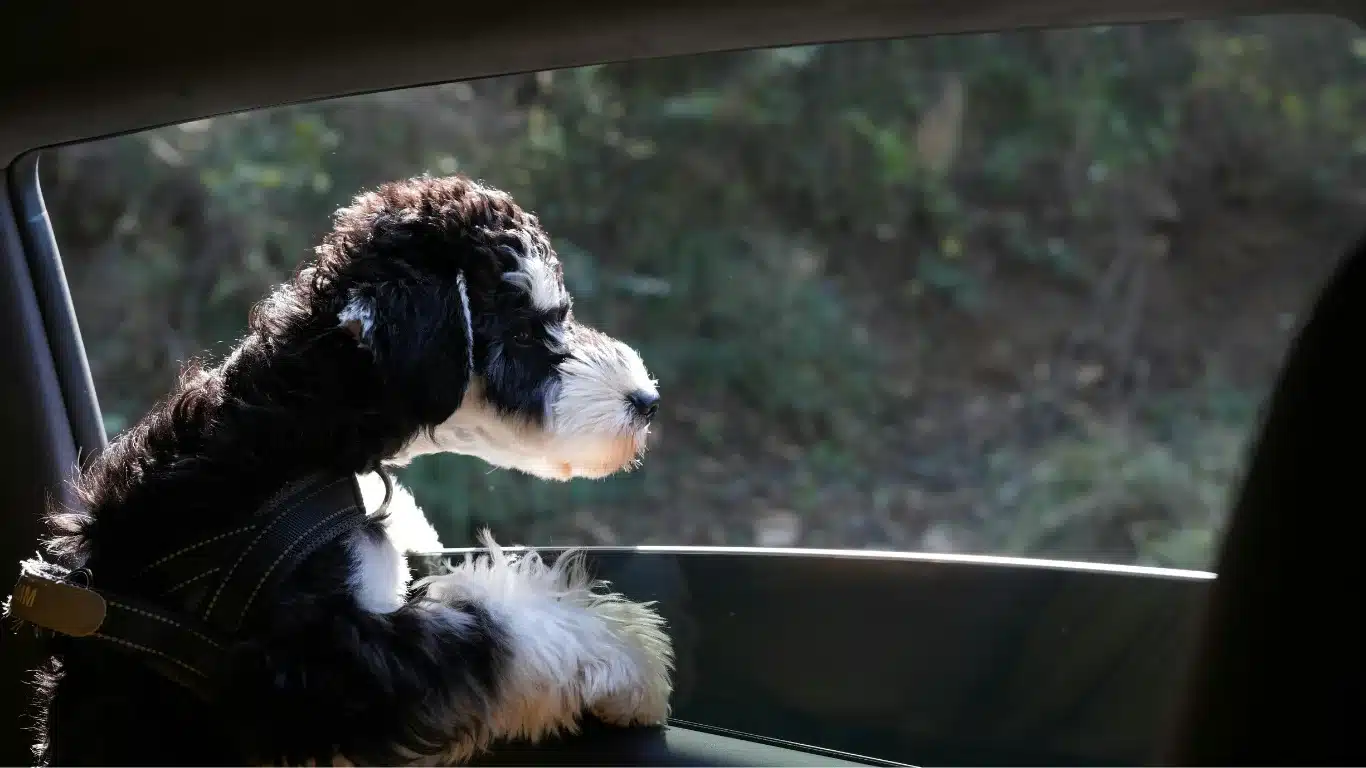
The movement of the car adds another layer. Objects appear and disappear quickly, which can trigger prey drive or territorial responses. Your dog “successfully” barks at a pedestrian, the pedestrian disappears (because the car drove past), and in your dog’s mind, their barking worked. This accidental reinforcement happens dozens of times per car ride.
What Mistakes Make Car Barking Worse?
Many well-meaning owners accidentally reinforce the very behaviour they’re trying to stop. Here are the most common mistakes.
1- Getting Your Dog Excited Before Getting in the Car
This is the biggest culprit. When you announce “Want to go for a ride?” in an excited voice, grab the leash enthusiastically, and allow your dog to pull you to the car, you’re setting up a barking session before you’ve even turned the key.
A calm departure sets the stage for a calm journey. Keep your pre-car routine low-key and matter-of-fact.
2- Yelling at Your Dog to Stop Barking
When your dog barks and you yell “Quiet!” or “Stop it!”, your dog often interprets this as you joining in. To them, you’re both barking at the same thing. This can actually increase their excitement and barking intensity.
3- Comforting an Anxious Dog During Barking Episodes
If your dog barks out of anxiety and you respond by petting them and saying, “It’s okay, it’s okay,” you may inadvertently be rewarding the anxious behaviour. Your attention, even well-meaning attention, can reinforce the barking.
4- Allowing Free Movement in the Car
Dogs who can move freely from window to window, climbing over seats and pacing, tend to be more reactive. The ability to patrol their “territory” keeps them in a heightened state of alertness (Important safety note, dogs should never be allowed to be loose in the vehicle. They should be crated or appropriately seatbelted. In the event of a crash
5- Only Taking Car Rides to Exciting or Stressful Destinations
If every car ride ends at the dog park (exciting) or the vet (stressful), your dog learns to anticipate these emotional experiences. Mixing in short, uneventful drives to nowhere can help break this association.
Do Dogs Who Bark at Home Also Bark in the Car?
In most cases, yes.
Dogs that bark at passersby through home windows will typically bark in the car too. The behaviour tends to be consistent across environments because the underlying motivation, whether that’s territorial behaviour, excitement, anxiety, or frustration, travels with the dog.
This actually works in your favour when it comes to training. If you can make progress addressing window barking at home, those improvements often carry over to car behaviour as well. The training approach doesn’t need to be dramatically different between the two settings.
However, some dogs do behave differently in cars. The confined space, movement, and different sensory experiences can either calm certain dogs or intensify their reactions. If your dog only barks in one context but not the other, a Bark Busters trainer can help identify what’s unique about that environment and develop a targeted approach.
The Bark Busters Approach to Car Barking
There isn’t one approach to fixing car barking. The right strategy depends entirely on your individual dog.
A dog barking from excitement needs different handling than a dog barking from fear. A territorial dog requires a different approach than a dog experiencing barrier frustration. Some dogs need more containment; others need gradual exposure work. Some respond quickly to training; others need more patience and repetition.
This is why Bark Busters trainers assess each dog individually before recommending a training plan. We look at what triggers the barking, whether your dog shows signs of excitement or anxiety, how they behave in other contexts (like at home), and what your specific car setup looks like.
The goal is to help your dog feel calmer and more settled during car rides, which naturally reduces the barking.
Car Safety Setup: Keeping Your Dog Contained
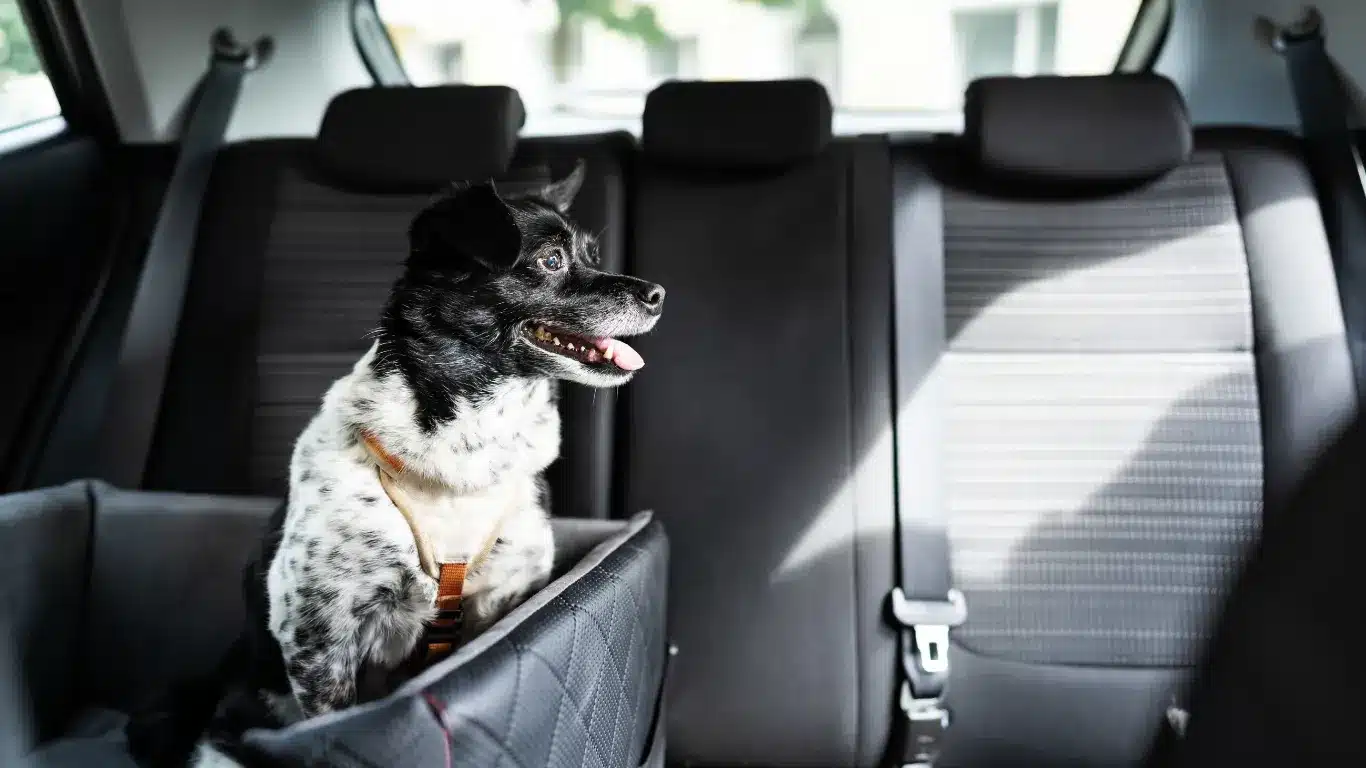
Regardless of the specific training approach, we always recommend a way to keep the dog safe and contained during car travel.
For smaller dogs, a crate secured in the back seat or cargo area is often the best option. The crate provides a den-like environment that many dogs find calming, and it prevents them from reacting to every passing stimulus.
For larger dogs, a seatbelt harness or a contained cargo area works well. The key is limiting your dog’s ability to pace and patrol while keeping them secure in case of sudden stops or accidents.
Practical Steps to Reduce Car Barking
While the specific approach varies by dog, these general principles help most reactive dogs become calmer in the car.
Start with Calm Departures
Before you even get in the car, set the tone. Keep your voice and energy low-key. Don’t ask “Want to go for a ride?” in an excited voice. Simply leash your dog, walk calmly to the car, and load them in without fanfare.
If your dog is already worked up before you leave, consider waiting until they settle before proceeding. Rushing a hyped-up dog into the car almost guarantees a barking-filled journey.
Tire Your Dog Out First
A dog who has had adequate physical and mental exercise is less likely to be reactive. A good walk or play session before car rides can take the edge off your dog’s energy and help them settle more easily.
Practice with the Car Stationary
You can’t effectively train your dog while you’re also trying to drive. Instead, spend time in the parked car in your driveway or a quiet parking lot working on calm behaviour before adding the complexity of movement.
Make Car Rides Boring
Mix up your destinations so the car doesn’t always predict excitement or stress. Short drives that end back at home help teach your dog that car rides aren’t always a big event.
When to Seek Professional Help
Car barking can be frustrating to address on your own, especially while you’re trying to focus on driving. If your dog’s behaviour is intense, if they seem genuinely distressed, or if your efforts aren’t producing results, working with a professional trainer makes a significant difference.
Bark Busters trainers work in your home and vehicle, addressing behaviours where they actually occur. We can observe your dog’s specific triggers, assess whether they’re barking from excitement, fear, or frustration, and develop a customized plan that fits your dog and your lifestyle.
Our lifetime support guarantee means you have backup as you work through the training process, because changing ingrained behaviours takes time and consistency.
Frequently Asked Questions About Dogs Barking in Cars
Why does my dog bark at some people but not others?
Dogs may react differently based on appearance, movement, or previous experiences. Someone walking quickly, wearing a hat, pushing a stroller, or accompanied by another dog might trigger barking when a slow-moving pedestrian doesn’t. Identifying your dog’s specific triggers helps focus training efforts.
Should I cover the windows so my dog can’t see out?
This depends on your dog. Some dogs calm down significantly when their view is restricted because there are fewer triggers to react to. Others become more anxious when they can’t see what’s happening. A Bark Busters trainer can help you determine which approach works best.
Is it better to use a crate or a harness in the car?
Both can work well. Crates are often best for smaller dogs and provide a more enclosed, den-like environment. Harnesses with seatbelt attachments work well for larger dogs who don’t fit in crates. The priority is keeping your dog safely contained and secure.
Will my dog grow out of car barking?
Unfortunately, barking behaviours typically don’t resolve on their own; they often intensify over time as the dog practises the behaviour repeatedly. Early intervention produces the best results.
How long does it take to fix the car barking?
This varies significantly based on the dog, the intensity of the behaviour, how long it’s been going on, and how consistently training is applied. Some dogs show improvement within a few sessions; others need more time and patience. The key is consistent practice without allowing the dog to rehearse the unwanted behaviour.
Getting Started
With the right approach tailored to your specific dog, peaceful car rides are absolutely possible.
If you’re struggling with a dog who barks at every passerby, whether from the car or through your home windows, a Bark Busters trainer can help. We’ll assess your dog’s individual triggers and motivations, recommend appropriate containment solutions, and teach you techniques to help your dog remain calm when they encounter the stimuli that currently set them off.
Find a Bark Busters trainer near you and take the first step toward stress-free drives with your dog.