




You step outside to enjoy your backyard, only to find another crater where your lawn used to be. Your dog looks up from their latest excavation project, tail wagging, completely oblivious to your frustration.
Digging is one of the most common behavioural challenges dog owners face, and it can feel impossible to stop. But once you understand why your dog is digging, you can address it humanely and effectively without resorting to punishment or gimmicks that don’t work.
Key Takeaways
• Dogs dig for specific reasons: The four main motivations are food (looking for something edible), safety (trying to escape to somewhere else), shelter (seeking a cooler spot on hot days), and entertainment (boredom—digging is fun!).
• Supervision is critical: Most digging happens when the human isn’t watching. Being present in the yard with your dog makes a significant difference.
• Different causes require different solutions: There isn’t one universal approach to stopping digging—the right strategy depends on why your dog is digging in the first place.
• Provide alternatives: Dogs who have plenty of things to do outside—toys to play with, someone to keep them busy—are less likely to dig out of boredom.
• New habits form in weeks, not months: With human consistency, most dogs will develop new habits within a few weeks.
Why Do Dogs Dig? Understanding the Four Main Causes
Before you can stop the digging, you need to understand what’s driving it. Dogs don’t dig to annoy you or destroy your yard; they dig because they’re meeting a need. Identifying that need is the first step toward solving the problem.
Food: Looking for Something Edible
Some dogs dig because they’re hungry or because they smell something interesting underground. This could be grubs, insects, buried bones from previous digging sessions, or even fertilizers like blood and bone that smell appealing to dogs.
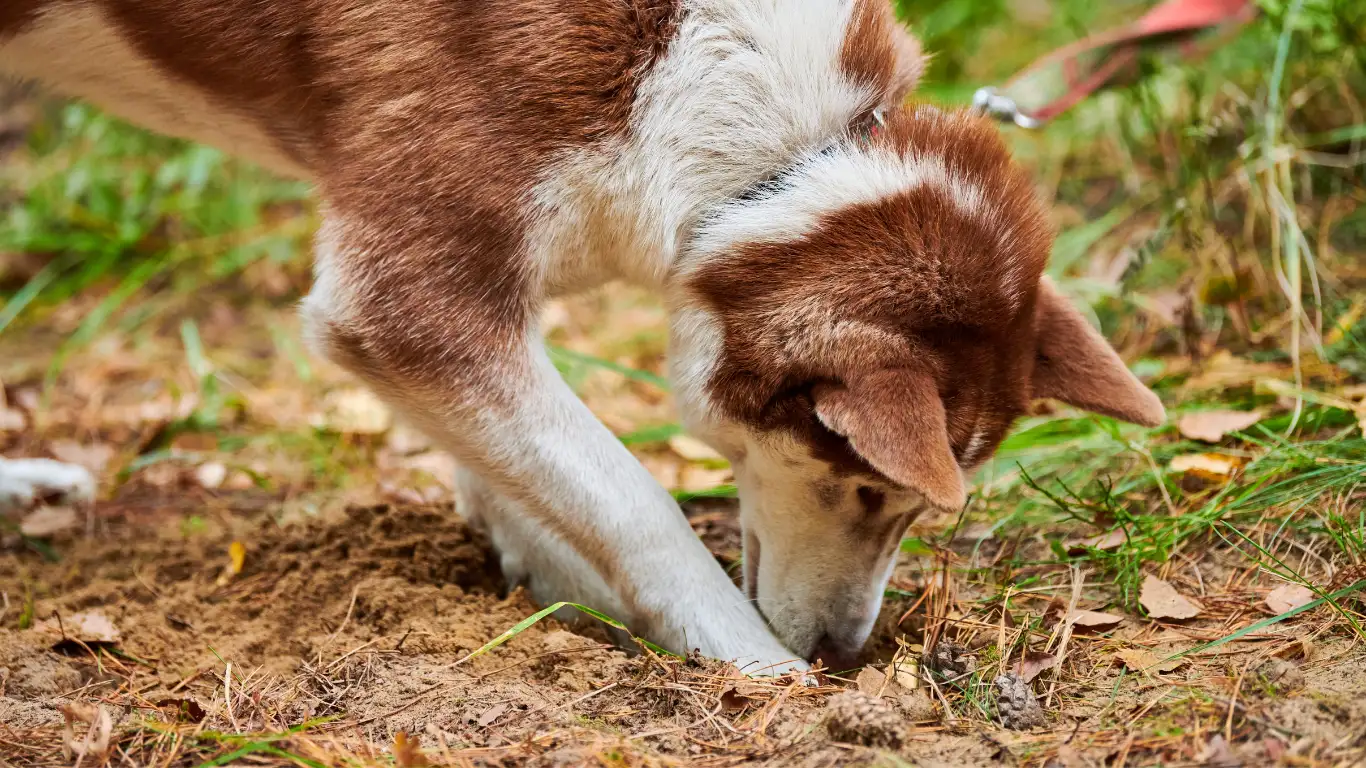
If your dog digs in specific spots rather than randomly throughout the yard, or if they seem intensely focused on one area with their nose to the ground, they may be hunting for something edible.
Safety: Trying to Get Somewhere Else
Dogs who dig along fence lines or at the base of gates are often trying to escape. This could be because they smell something interesting on the other side, they’re anxious about being left alone, or they simply find the world beyond your fence more appealing than your yard.
Escape digging is particularly common in intact male dogs who may smell a female in heat, and in dogs with separation anxiety who are trying to find their owners.
Shelter: Seeking Temperature Relief
On hot days, dogs instinctively dig to reach the cooler earth beneath the surface. This behaviour is especially common in thick-coated breeds like Huskies and Malamutes, but any dog can dig for temperature regulation.
If your dog digs shallow depressions and then lies in them, shelter-seeking is likely the cause. You might also notice this behaviour increases during summer months or on particularly warm days.
Entertainment: Digging Is Fun!
Perhaps the most common reason dogs dig is simply that it’s enjoyable. Digging provides physical exercise and mental stimulation. There’s immediate feedback as dirt flies and interesting smells emerge. For a bored dog left alone in the yard, digging becomes self-entertainment.
Entertainment digging often looks joyful—your dog may have a playful expression, dig enthusiastically, and seem to be having a great time. Unfortunately, “having a great time” and “destroying your lawn” often go hand in hand.
Are Some Breeds More Prone to Digging?
All dogs can dig; it’s a natural canine behaviour that traces back to their wolf ancestors. However, some breeds are more likely to dig due to generations of selective breeding.
Vermin-hunting breeds are particularly prone to digging because they were bred to pursue prey underground. This includes terriers of all types (Jack Russell Terriers, Fox Terriers, Yorkshire Terriers), and scent hounds like Beagles and Basset Hounds who follow their noses wherever they lead.
Northern breeds like Siberian Huskies and Alaskan Malamutes may dig for temperature regulation, creating cool spots to rest in warm weather or warm burrows in cold conditions.
How to Diagnose Why Your Dog Is Digging
Understanding the cause helps you choose the right solution. Here’s how to identify what’s driving your dog’s digging behaviour.
Look at where they dig. Digging along fence lines suggests escape attempts. Digging in one specific area might indicate prey or something buried. Random holes throughout the yard often point to boredom or entertainment.
Consider when they dig. Does it happen when you’re away? That suggests boredom or separation anxiety. Does it increase in hot weather? Temperature regulation is likely involved. Does it happen even when you’re home and engaged with your dog? That might indicate a strong instinctual drive.
Observe how they dig. Frantic, focused digging with nose to the ground suggests hunting behaviour. Joyful, energetic digging that seems like play indicates entertainment. Digging followed by lying in the hole points to shelter-seeking.
Assess their lifestyle. How much exercise does your dog get? How much time do they spend alone in the yard? Do they have toys and activities available outside? A dog who is under-exercised and left alone with nothing to do is far more likely to dig than one who is tired and mentally satisfied.
What Doesn’t Work (And What Makes Digging Worse)
Many well-meaning dog owners try strategies that simply don’t address the underlying problem or that backfire entirely.
Not Supervising
This is the biggest factor. A lot of digging happens when the human isn’t watching. If your dog has unrestricted, unsupervised access to the yard, they have unlimited opportunities to practise the behaviour. Every time they dig without interruption, the habit becomes more ingrained.
Punishment After the Fact
Coming home to find holes in your yard and then punishing your dog doesn’t work. Dogs don’t connect punishment with something they did hours or even minutes ago. Your dog won’t understand why you’re upset, and you’ll only damage your relationship.
Worse, if your dog is digging due to anxiety, punishment makes the situation worse by increasing their stress.
Only Addressing the Symptom
Covering holes, putting down chicken wire, or using deterrent sprays might protect specific areas, but if your dog is digging out of boredom, they’ll simply find a new spot. You need to address the underlying cause, not just make certain areas less appealing. Request help from Bark Busters trainers to address the cause.
How to stop digging
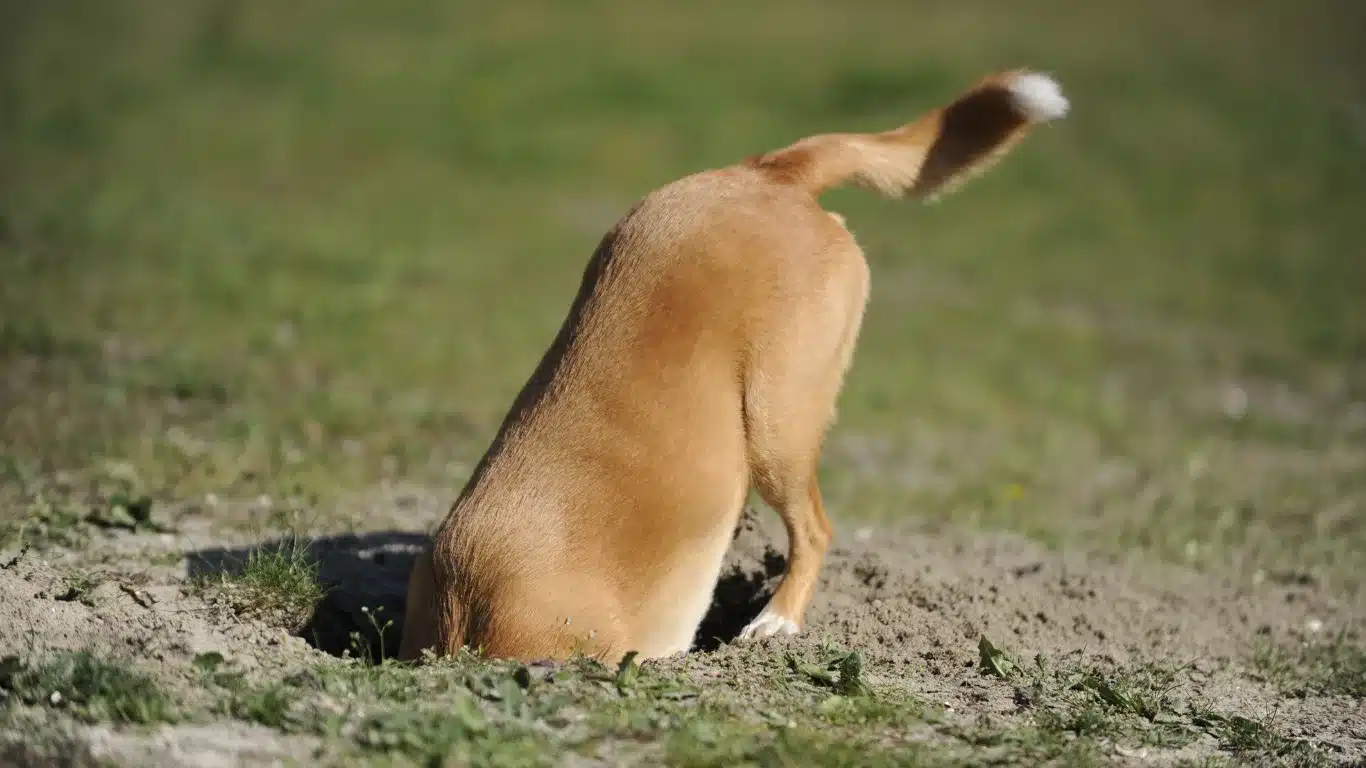
The right approach depends on why your dog is digging, but these strategies help most digging dogs.
Increase Supervision
The simplest change is often the most effective. Instead of letting your dog roam the yard unsupervised, be present when they’re outside. This allows you to redirect behaviour before it starts and helps your dog associate yard time with interacting with you rather than self-entertainment.
If you can’t be outside with your dog, limit their unsupervised yard time. Bring them inside when you can’t watch them.
Provide Plenty of Things to Do
What all owners should do is have plenty of things to do outside—toys to play with, and ideally someone to keep them busy. Dogs with engaging alternatives are far less likely to dig out of boredom.
Rotate toys regularly to keep them interesting. Puzzle feeders, durable chew toys, and interactive toys can help. Consider frozen treats in hot weather that give your dog something to work on.
Address Physical and Mental Exercise Needs
A tired dog is less likely to dig. Make sure your dog is getting adequate daily exercise through walks, play sessions, or other activities appropriate for their age and breed.
Mental stimulation matters as much as physical exercise. Training sessions, nose work games, and puzzle toys help tire your dog’s brain, reducing the need to self-entertain through digging.
Create a Designated Digging Area
If your dog loves to dig, consider giving them a sanctioned spot. A sandbox or a designated corner of the yard filled with loose soil or sand becomes their digging zone. Bury toys or treats there to make it appealing, and redirect your dog to this area whenever they start digging elsewhere.
This approach works well for dogs who dig for entertainment—they get to engage in the behaviour they enjoy without destroying your lawn.
Address Environmental Factors
If your dog digs for temperature regulation, provide shade, fresh water, and consider bringing them inside during the hottest parts of the day. Cooling mats, elevated beds, or even a kiddie pool can give your dog alternatives to digging for cool spots.
If your dog is digging after prey, consider humane pest control to reduce the critters attracting your dog’s attention. Be careful not to use any products that could harm your dog.
Work with a Professional Trainer
Because different situations require different approaches, working with a professional trainer helps ensure you’re addressing your specific dog’s needs. A Bark Busters trainer can assess why your dog is digging, evaluate their environment and lifestyle, and create a customized plan that fits your situation.
There isn’t one Bark Busters approach to digging—it depends on the dog’s history, temperament, and environment. What works for a bored Labrador won’t necessarily work for a terrier with strong hunting instincts. Professional guidance helps you find the right solution faster.
What to Do When You Catch Your Dog Mid-Dig
The right response depends on your individual dog, but here are some general principles.
Interrupt without punishment. A calm verbal interruption can break your dog’s focus. Avoid yelling or physical corrections, which can create fear or confusion.
Redirect to an appropriate activity. Once you have your dog’s attention, give them something else to do. This might be playing with a toy, practising some training commands, or simply engaging with you.
Address the underlying need. If your dog is hot, bring them inside or provide shade. If they seem anxious, stay with them. If they’re full of energy, add more exercise to their routine.
How Long Does It Take to Stop Digging?
With human consistency, most dogs will form new habits within a few weeks. Some factors affect the timeline. Dogs who have been digging for years may take longer to redirect than those who just started. Dogs with strong breed-related instincts (like terriers) may need more management strategies in addition to training. Dogs who are digging due to anxiety may need that underlying issue addressed before the digging stops.
Don’t expect overnight results, but do expect steady improvement with consistent effort.
Frequently Asked Questions About Dogs and Digging
Will my dog grow out of digging?
Unlikely. Digging is a self-rewarding behaviour that typically doesn’t resolve on its own. Without intervention, most dogs continue or even increase their digging over time.
Is digging a sign of a behavioural problem?
Not necessarily. Digging is a normal canine behaviour. However, excessive digging can indicate unmet needs for exercise, mental stimulation, or companionship. If your dog is digging compulsively or seems distressed, consult a professional.
Should I let my dog dig in certain areas?
If your dog enjoys digging and you have space, a designated digging zone can be a great compromise. This allows your dog to engage in natural behaviour while protecting the rest of your yard.
Can I train my dog to stop digging completely?
You can significantly reduce digging by addressing the underlying causes and providing alternatives. However, because digging is a natural behaviour, the goal is usually management and redirection rather than complete elimination.
What if my dog only digs when I’m not home?
This suggests boredom, separation anxiety, or simply opportunity. Limit unsupervised yard access, increase exercise before you leave, provide engaging activities while you’re away, and consider whether your dog might do better inside during your absence.
Getting Professional Help
Digging can be frustrating to address on your own, especially when you’re not sure what’s causing it. A Bark Busters trainer can help you identify the specific factors driving your dog’s behaviour and develop a plan tailored to your situation.
Our in-home training approach means we assess your dog in their actual environment, the yard where the digging happens, and work with your family’s specific circumstances. We’ll help you understand what your dog needs and show you techniques to redirect the behaviour humanely.
With the right approach and consistent effort, you can have a dog who enjoys the yard without destroying it. Find a Bark Busters trainer near you to get started.